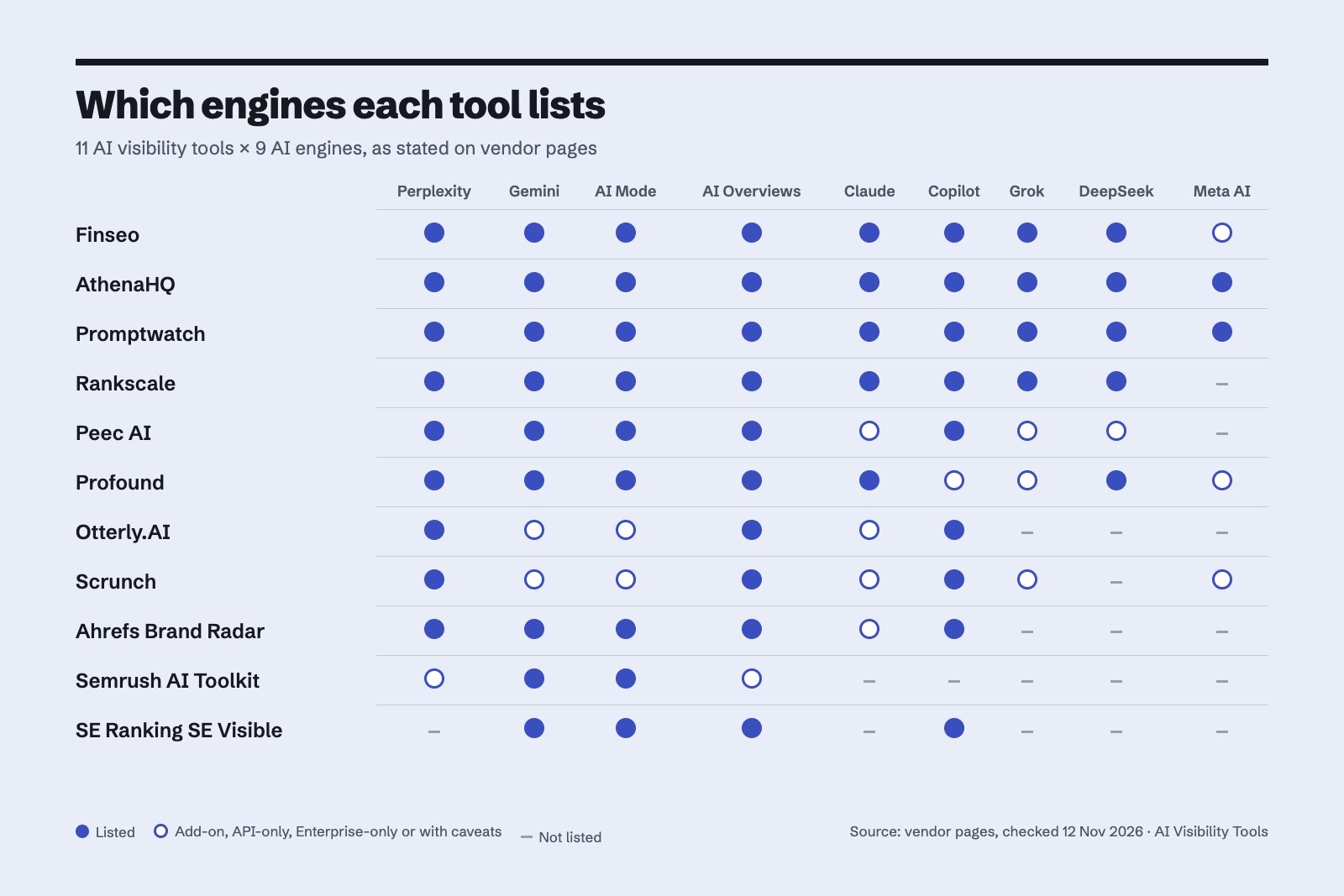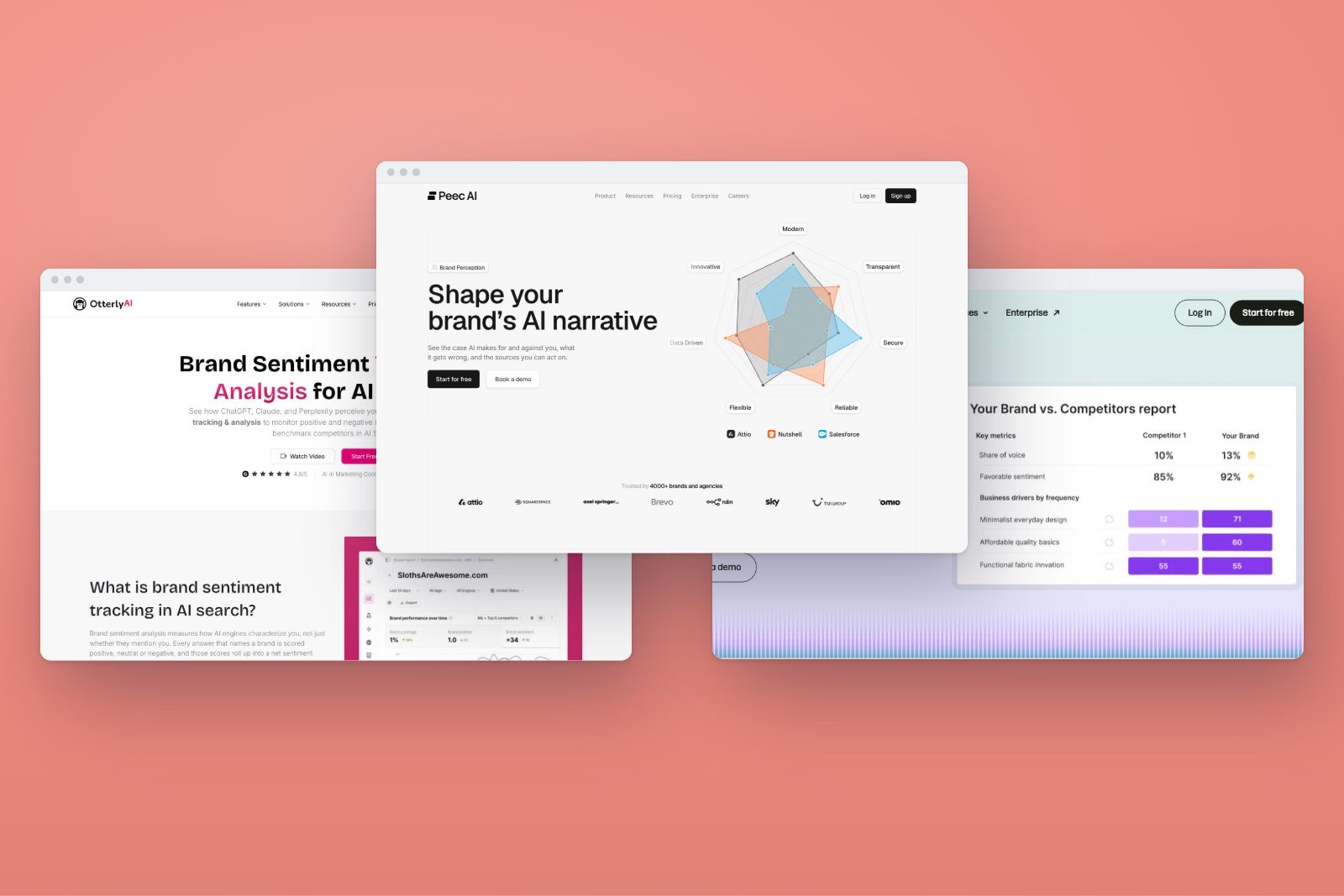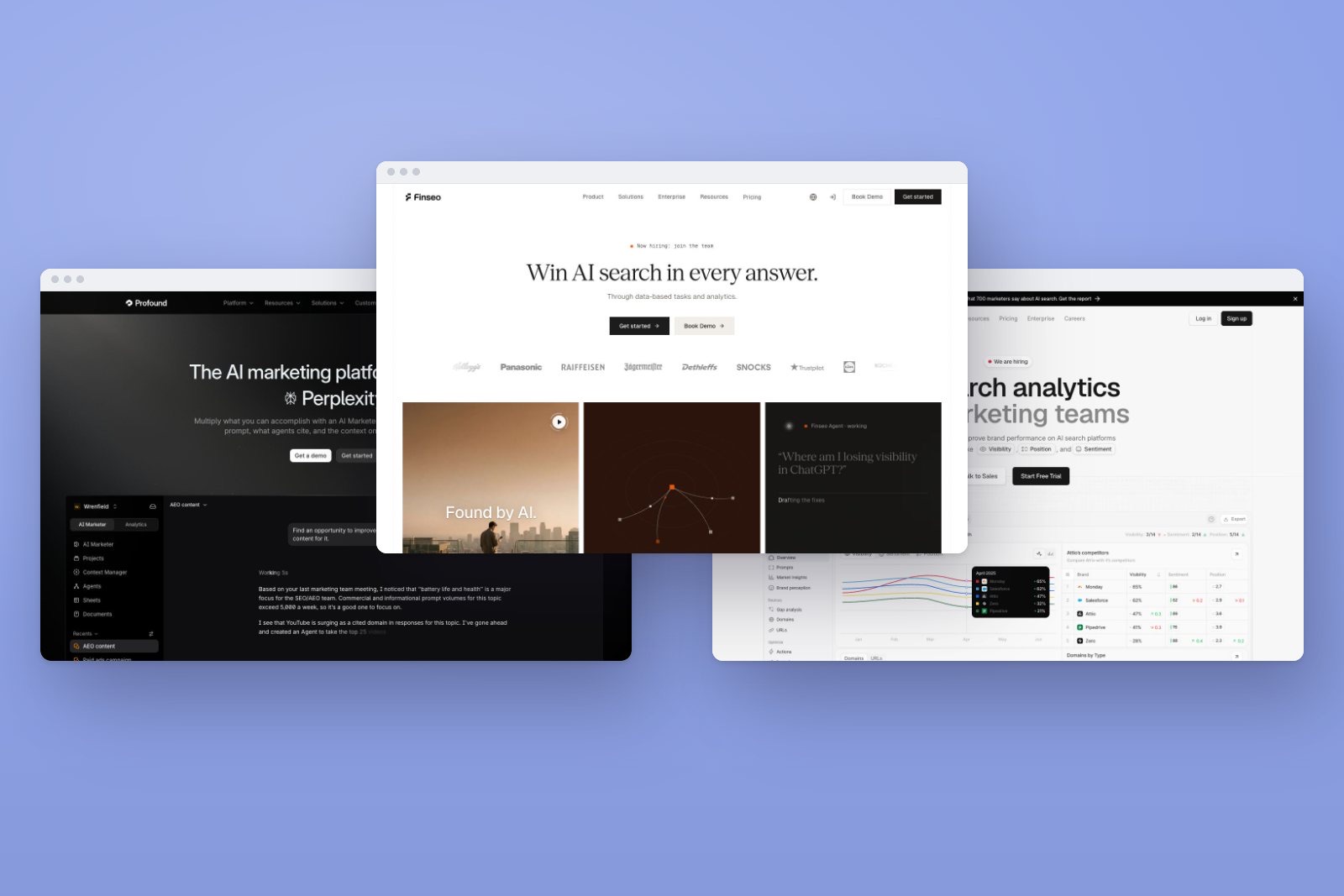
We compared 12 AI visibility platforms on engine coverage, measurement depth, actionability, attribution and price — checked against vendor pages in November 2026.
The short answer
- Finseo is the most complete all-in-one option for brands and agencies because it combines AI visibility tracking with citations, prompt research, bot analytics, attribution, content actions, API access and MCP.[14][1]
- AI visibility pricing is not directly comparable: Peec and Promptwatch publish prompt-and-response allowances, while AthenaHQ uses response credits and Ahrefs separates checks from its broader visibility index.[1]
- Engine coverage is tier-dependent, so a vendor’s catalogue headline does not guarantee that every engine is available in the entry plan.[2]
- Google AI visibility can affect traffic, but published studies produce different results because their query populations, dates and CTR definitions differ.[1]
- A reliable buying decision requires inspectable answers and citations, a fixed prompt cohort, clear metric formulas, documented collection methods and security claims with a defined scope.[1]
Everything we recommend
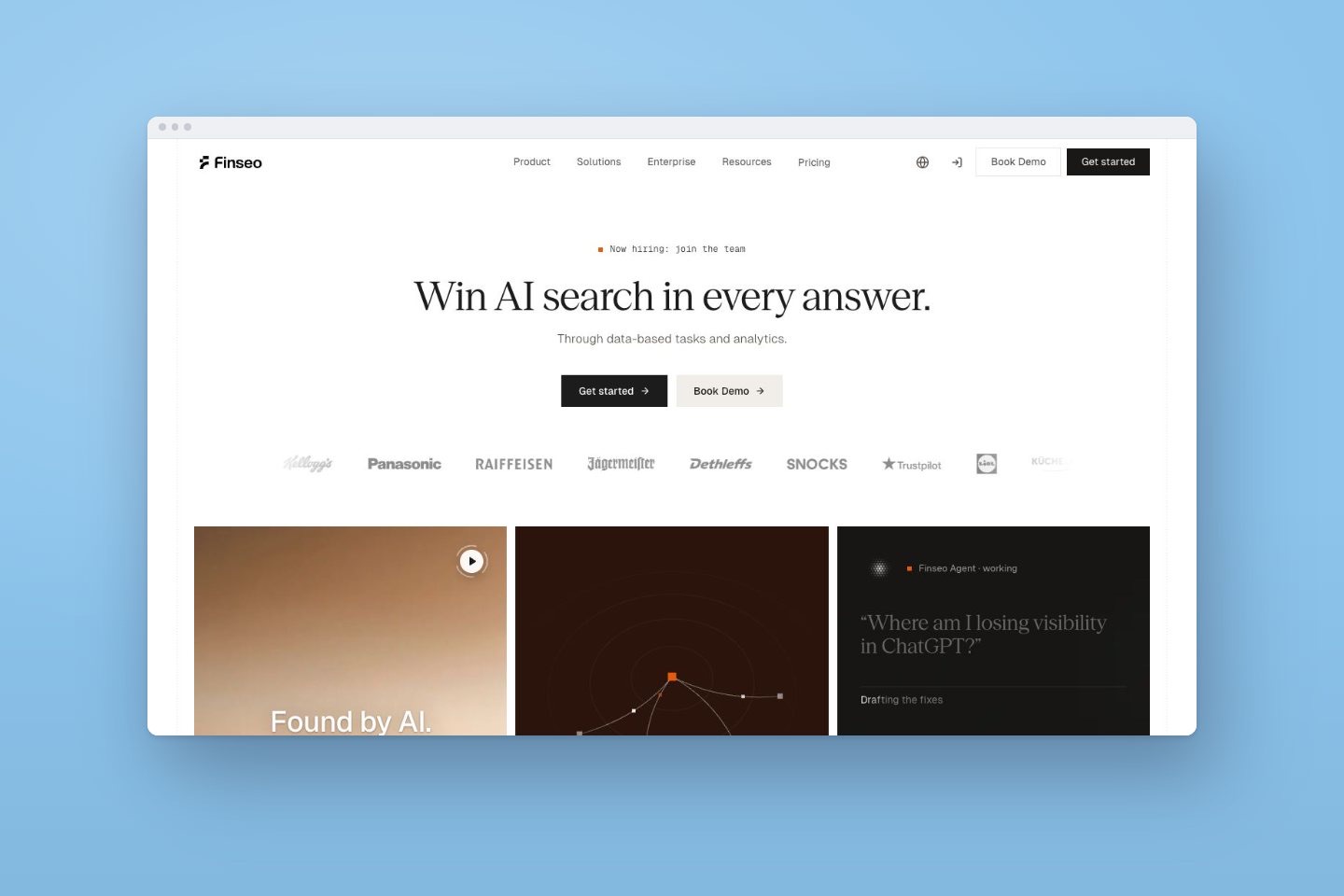 No. 1 Brands and agencies that want tracking, attribution and tasks in one place Finseo €84 / month (Starter, 7-day trial) · €70 / month billed annually
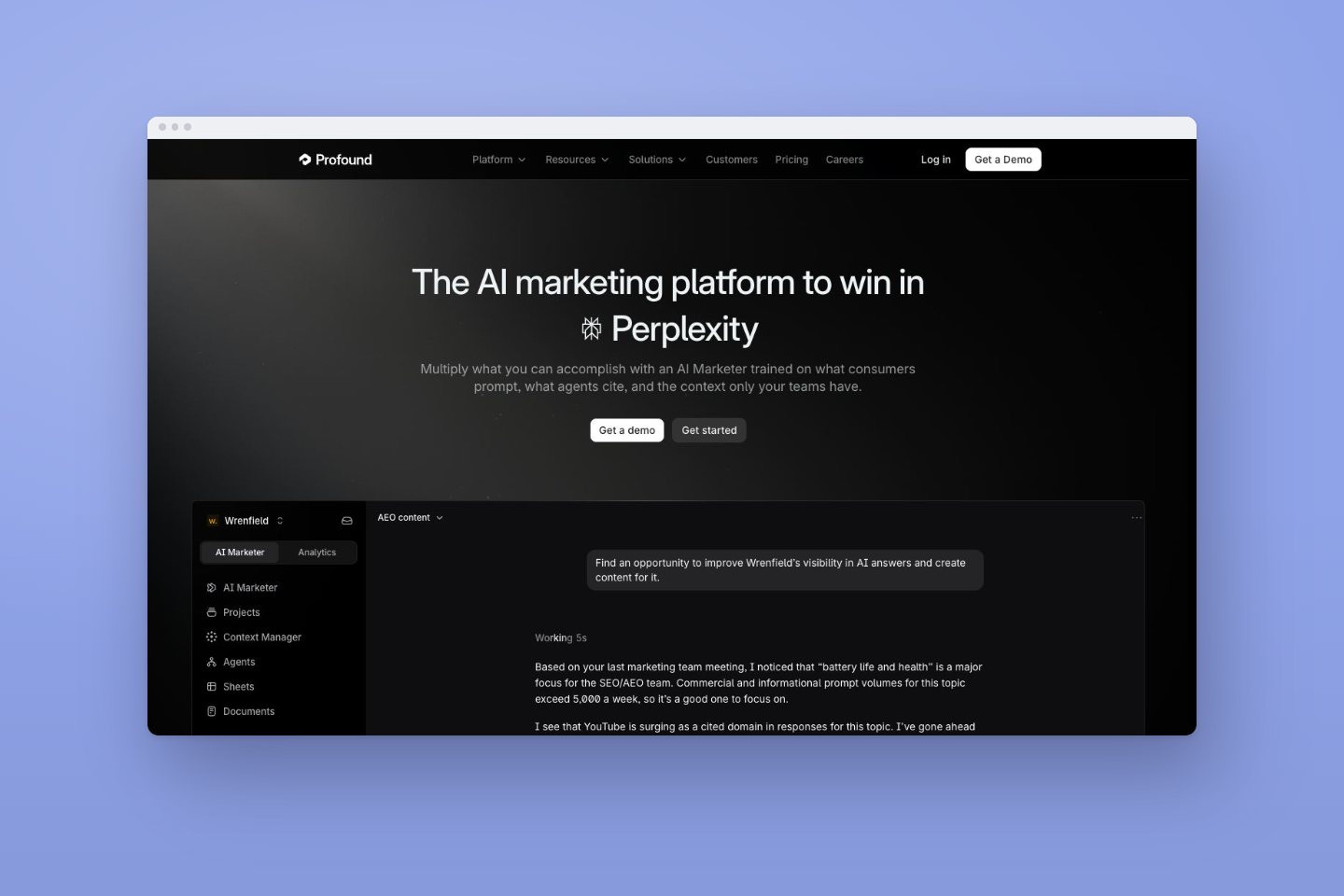 No. 2 Large organizations operationalizing AI search and marketing agents at scale Profound Custom (Enterprise) · free 7-day trial
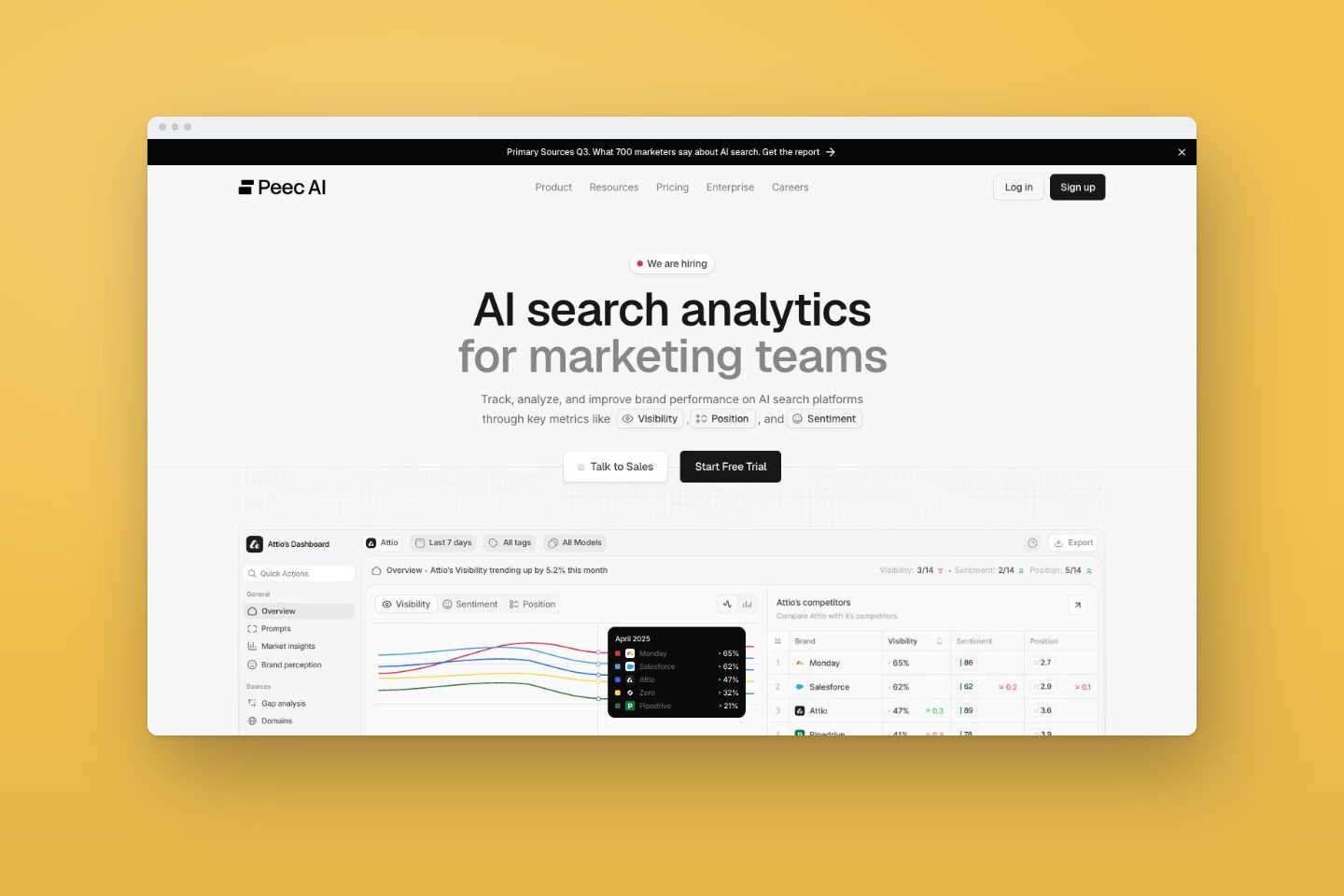 No. 3 SEO and content teams that want a defined daily prompt cohort Peec AI $95 / month (Starter) · 15% off with annual billing See all 12 reviews
How we test
- Engine coverageWhich AI engines a tool tracks, and whether an engine costs extra.
- Measurement depthMentions, position, share of voice, citations, sentiment and prompt history.
- From data to actionRecommendations, content optimization, tasks and reporting.
- Traffic and attributionAI crawler analytics and GA4 or Search Console connections.
- AccessAPI, MCP server, integrations and multi-client workspaces.
- Price to startThe entry plan's price and exactly what it includes.
What is AI visibility and why does it matter in 2026?
AI visibility is the extent to which a brand appears, ranks, is recommended or is cited in answers from generative search engines such as ChatGPT, Google AI Overviews, Google AI Mode, Perplexity and Gemini. An AI visibility platform typically monitors prompts, records answer text and cited URLs, compares competitors, and reports metrics such as mentions, position, sentiment and share of voice.[1][2]
The commercial importance is growing as AI answers become an additional discovery layer. OpenAI reported more than 1.2 billion weekly ChatGPT users in October 2026, while Google reported more than 1 billion monthly Gemini app users in August 2026; these figures describe different metrics and should not be treated as market share.[3]
Google AI Overviews also change the relationship between visibility and traffic. Pew found that traditional-result clicks occurred on 8% of visits with an AI summary, compared with 15% without one, while summary links received clicks on 1% of visits.[4] Ahrefs’ December 2025 analysis estimated position-one CTR at 1.6% when an AI Overview appeared, versus a modeled 3.7% counterfactual.[5] Seer’s early-2026 data found a different pattern, with AIO organic CTR recovering from 1.31% in December to 2.36% in February.[6]
The practical conclusion is not that every brand should maximize one universal score. The right AI visibility tracker should measure the prompts, markets, engines, competitors and outcomes that matter to your customer journey.
Which AI visibility tools are best in 2026?
Finseo is the strongest all-in-one choice for brands and agencies that need tracking connected to action. It combines prompt monitoring, citation and competitor analysis, prompt research, AI traffic analytics, attribution, bot analytics, prioritized tasks, content optimization, reporting, an AI agent, API access and MCP.[1]
Profound is better suited to enterprise buyers seeking prompt-demand intelligence and agent workflows, while Peec AI offers a defined daily monitoring cohort with content and optimization features.[1] Otterly.AI and Rankscale are compelling lower-cost options, but their credit and engine-allocation models require careful workload planning.[7]
Semrush and Ahrefs are particularly useful for buyers already invested in broader SEO ecosystems or who value research indexes and established data products.[8][9] Scrunch, AthenaHQ, Promptwatch, SE Ranking and Writesonic each become more attractive when their specific workflow, integration or enterprise requirements match the buyer’s needs.[10][2]
At-a-glance comparison of AI visibility platforms
| Tool | Engines tracked | Starting price | Standout | Best for |
|---|---|---|---|---|
| Finseo | 23 catalogued; Starter tracks 3 selected models simultaneously | €84/month, or €70/month billed annually | Tracking, citations, attribution, bot analytics, tasks, content actions, API and MCP | Brands and agencies wanting an integrated GEO operating system |
| Profound | Trial: ChatGPT, Gemini and AIO; enterprise catalogue includes 10 named surfaces | Free 7-day trial; paid pricing custom | Prompt-demand intelligence and AI agents | Enterprise AI-search operations |
| Peec AI | 14 named choices; Starter tracks 3 active models | $95/month | Daily monitoring plus agent and optimization workflow | SEO and content teams |
| Semrush AI Visibility Toolkit | Module-specific coverage including ChatGPT, AI Mode, Gemini, Perplexity and AIO | $99/month per domain, billed annually | SEO context, research and reporting | Existing Semrush users and SEO teams |
| Ahrefs Brand Radar | AIO, AI Mode, ChatGPT, Perplexity, Gemini, Copilot; Custom Prompts adds Claude | $50/month for Custom Prompts; Index from $199/month | Broad AI visibility index and custom checks | Discovery and competitor benchmarking |
| Otterly.AI | ChatGPT, AIO, AI Mode, Gemini, Perplexity, Copilot and Claude | $29/month | Low-cost selected-engine monitoring | Solo marketers and small teams |
| Scrunch | Core: ChatGPT, Perplexity, AIO and Copilot; Enterprise adds 5 more | $250/month | Enterprise data collection and delivery options | Larger brands and agencies |
| AthenaHQ | 11 named models including ChatGPT, Perplexity, AIO, AI Mode and Gemini | Free; Starter $295/month | Response-credit workflow and content execution | Teams wanting monitoring plus action |
| Rankscale | 17+ engines advertised | Pro $99/month; Essentials annual pricing needs confirmation | Broad engine choice and MCP | Agencies and multi-brand teams |
| Promptwatch | Live-search and API-model coverage across named platforms | $95/month | Monitoring, crawler data and publishing workflows | Brands with technical or CDN-connected operations |
| SE Visible | ChatGPT, AIO, AI Mode, Gemini and Copilot | From $89/month | Integration with SE Ranking | Existing SE Ranking customers |
| Writesonic GEO | Starter: ChatGPT, Gemini and AIO; Enterprise lists 8 platforms | $99/month, or $79/month billed annually | Content optimization and action workflows | Growth teams combining GEO and content execution |
Checked against each vendor’s public pricing and product pages on 11 November 2026. Prices and allowances are not directly comparable because vendors meter different combinations of prompts, responses, credits, engines and checks.[1]
How should you compare AI visibility tools?
1. Compare the actual workload allowance
A prompt is not always the unit being billed. Peec Starter includes 50 prompts, three active models and 4,500 monthly answers, while Promptwatch Essential includes 50 prompts and 6,000 responses.[11][1] AthenaHQ Starter instead provides 3,600 response credits, with one credit representing one AI response.[12][13]
Calculate the required workload using:
[ \text{monthly responses}=\text{prompts}\times\text{active engines}\times\text{runs per month} ]
Then check whether locations, languages, personas, competitor prompts and refreshes consume additional allowance.
2. Separate engine catalogue from plan coverage
A vendor may advertise a large catalogue while restricting entry plans to a few active engines. Finseo’s self-serve brand plans track three selected models simultaneously, although Enterprise includes all 23 catalogued models.[14][2] Scrunch Core includes four engines compared with nine on Enterprise, and Writesonic Starter includes three compared with eight on Enterprise.[15]
Ask for a written entitlement table covering each required surface, including ChatGPT Search, Google AI Overviews, AI Mode, Gemini, Claude, Perplexity and Copilot.
3. Check how answers are collected
Collection method affects reproducibility and comparability. Peec describes automated browser sessions on actual web interfaces while also documenting API-model options.[1] Otterly uses public AI websites but collects Claude through its API.[2][1] Promptwatch uses consumer-product sessions for live-search platforms and provider APIs for designated model options.[16]
A vendor should explain the method, login state, location handling, personalization controls, refresh cadence and whether answer text and citations are retained.
4. Inspect the metric definitions
“Visibility,” “share of voice,” “position” and “citation rate” are not universal industry standards. Profound defines visibility using responses containing at least one brand and defines share of voice as a brand’s mentions divided by total brand mentions.[17] Ahrefs distinguishes linked-URL citations from string-match mentions.[18][19]
Require the numerator, denominator, matching rules, competitor set and treatment of answers containing multiple brands.
5. Measure action and business outcomes
A dashboard may show visibility without explaining what to change. Finseo connects monitoring with prioritized tasks, content optimization, AI referral analytics and attribution.[1] Semrush Enterprise AIO combines monitoring with logs, recommendations and ROI attribution, while Writesonic emphasizes content workflows and action recommendations.[20][21]
Keep four layers separate: answer visibility, crawler activity, human referral traffic and conversions. A citation is evidence of presence, not proof of traffic or revenue.
6. Evaluate governance and integration rights
Confirm project limits, roles, SSO, audit logs, data residency, API access, MCP access, exports, support and integration costs. Features described on an enterprise page may be custom entitlements rather than standard plan inclusions.[1]
How does AI visibility measurement work?
AI visibility measurement usually begins with a fixed prompt set. The platform submits prompts to one or more engines, stores the resulting answers and extracts brand mentions, competitor mentions, positions, sentiment and citations. Some tools also discover prompts from keyword data, People Also Ask, AI fan-out queries, clickstream data or licensed conversation datasets.[1]
A defensible measurement design fixes:
- Prompt wording and funnel stage
- Engine and product surface
- Country, language and device
- Login and personalization state
- Refresh cadence
- Competitor set
- Brand and entity-matching rules
- Denominator for visibility and share-of-voice calculations
- Treatment of citations, links and third-party sources
The GEO research literature supports testing evidence-rich content, but not promising a universal traffic increase. The GEO paper introduced a benchmark of 10,000 queries and reported relative visibility improvements under its experimental conditions, including approximately 41% for its best position-adjusted word-count result and 28% for subjective impression.[7] It also found little or no benefit from keyword stuffing and warned that results vary by domain, query distribution and engine.[7]
What is the difference between a mention, citation, position and share of voice?
A mention means the answer names the brand. A citation generally means the engine links to or references a source, although vendors differ in whether they count only linked URLs or broader references.[1]
Position may mean list order, first mention, citation order or a composite score, so the vendor’s formula must be checked. Share of voice normally compares a brand’s prominence with competitors, but the denominator and treatment of multiple brands vary.[1]
The most useful report includes the raw answer, cited URLs, prompt, engine, location, timestamp and metric formula. Aggregate scores should support inspection rather than replace it.
How should you compare pricing: prompts, responses or engines?
Start with the number of prompts that need monitoring, then multiply by active engines and refresh frequency. A tool offering 50 prompts may produce very different coverage depending on whether it runs those prompts daily across three engines or meters a shared response-credit pool.
Finseo Starter costs €84 monthly, or €70 per month when billed annually, for 50 prompts and three selected models.[14] Peec Starter costs $95 monthly for 50 prompts, three active models and 4,500 monthly answers.[22] Promptwatch Essential costs $95 monthly for 50 prompts and 6,000 responses.[11] Writesonic Starter costs $99 monthly, or $79 billed annually, but lists 50 prompts and 50 tracked answers daily across three engines.[23][24]
Lower-cost monitoring includes Otterly Lite at $29 monthly, with November 2026 examples of 20 daily prompts across three engines or 16 across four, and 2,000 credits.[25] Ahrefs separates Custom Prompts at $50 monthly for 2,500 checks from its AI Visibility Index, which starts at $199 monthly and costs $699 monthly for all models.[23][8]
Before comparing annual totals, ask:
- Is the price monthly or an annual-billing equivalent?
- Is the allowance measured in prompts, checks, answers or credits?
- Does one prompt across three engines consume three units?
- Are locations and languages charged separately?
- Are extra engines included or sales-gated?
- Does API, MCP, reporting or attribution require an upgrade?
- What happens when the allowance is exhausted?
- Are historical answers retained after downgrading?
What do the security and compliance claims mean?
Security claims should be separated into certifications, audits, hosting arrangements, contractual commitments and product controls. A SOC 2 report, ISO 27001 certification, GDPR statement or cloud-provider certificate does not automatically establish every other claim.
Profound publishes SOC 2 Type II and enterprise SAML/OIDC SSO.[26][20] Peec announced a SOC 2 Type II examination completed on 30 October 2026.[27] Promptwatch announced ISO/IEC 27001:2022 certification on 26 October 2026.[28] Ahrefs lists ISO 27001:2022 and SOC 2 in its trust centre.[29][30]
Finseo describes German hosting, EU data residency, GDPR alignment, DPAs, enterprise SAML/SSO and audit trails; its trust-centre wording describes an ISO-based ISMS rather than a published ISO certificate.[14][31] Otterly states that its own SOC 2 audit remains on its roadmap and says monitoring data is stored in North Virginia, despite AWS Frankfurt hosting.[32] Rankscale states that its primary GCP data centre is in Iowa, United States.[33]
For procurement, request:
- The exact certification or audit scope
- Report or certificate dates
- Subprocessors and hosting regions
- Data-processing agreement
- Retention and deletion terms
- SSO, roles and audit-log availability
- API-key and OAuth controls
- Whether customer prompts and answers are used for training
Which AI visibility tool is right for whom?
- For an all-in-one brand or agency platform: Choose Finseo when the requirement spans monitoring, citations, prompt research, bot analytics, attribution, content actions, reporting and developer access.[1]
- For enterprise prompt intelligence and agents: Evaluate Profound, especially when licensed prompt-demand research and agent execution matter more than a published self-serve price.[1]
- For daily monitoring with content workflows: Consider Peec AI for its defined three-model monitoring cohort, agent credits and optimization features.[1][11]
- For inexpensive selected-engine tracking: Consider Otterly.AI, provided its engine allocation, credit rules and Standard-tier requirements fit the workload.[25]
- For broad discovery and SEO research: Compare Ahrefs Brand Radar and the Semrush AI Visibility Toolkit, while separating index refreshes from controlled daily prompt tracking.[8][23]
- For enterprise technical delivery: Shortlist Scrunch when governance, browser/API collection and custom integration options justify its higher entry price.[1]
- For response-credit-based content operations: Consider AthenaHQ if optimization, outreach and workflow execution are as important as tracking.[34]
- For broad engine choice and MCP: Evaluate Rankscale, but confirm Essentials pricing and buy the appropriate API tier if REST access is required.[23]
- For crawler-connected publishing workflows: Consider Promptwatch, particularly when CDN data, content workflows and MCP are central requirements.[35]
- For existing SE Ranking customers: Start with SE Visible and verify whether the included Start allowance is sufficient before buying a standalone package.[10]
- For content-led GEO execution: Consider Writesonic GEO when site audits, content optimization and Action Center workflows outweigh the limited Starter tracking allowance.[24]
Which AI visibility tool should you choose? All 12 reviewed
No. 1

1. Finseo
All-in-one AI visibility platform from tracking to action
Finseo is built by the team behind this site.
Finseo tracks how brands appear in ChatGPT, Gemini, Google AI Overviews and AI Mode, Claude, Perplexity, Copilot, Grok, DeepSeek and Mistral Le Chat, and adds regional engines such as Naver, Qwen and Meta AI for enterprise teams. It connects visibility with AI crawler logs, AI referral traffic and order-level attribution, then turns gaps into prioritized tasks.
- Starting price
- €84 / month (Starter, 7-day trial) · €70 / month billed annually
- Engines
- 3 selected models on Starter (more bookable) · all 23 models on Enterprise
- Standout
- Turns AI answers into prioritized tasks, with bot analytics and revenue attribution
- Best for
- Brands and agencies that want tracking, attribution and tasks in one place
Key features
- Visibility, mention rate, citations, position and sentiment per prompt, engine and country
- Citation and source analysis, competitor benchmarking and gap analysis
- Prompt research and query fan-out analysis
- AI crawler analytics from CDN or server logs and AI traffic attribution (GA4, Piwik PRO, Matomo)
- Prioritized tasks with export, content optimization with an AEO score and an AI agent
- MCP server on every plan, REST API and webhooks from Growth, Looker Studio connector
Strengths
- Widest engine coverage in this comparison, including Asian and Latin American engines
- Goes beyond monitoring: tasks, content tools and attribution in the same workspace
- Unlimited seats on every plan; hosted in Germany with a DPA
Limitations
- Younger vendor than the large SEO suites
- Not a full SEO suite — no backlink index or classic rank tracking
- Self-serve plans track three engines at the same time
VerdictThe most complete pick for teams that want to act on AI visibility, not only watch it.
Sources: Finseo pricing · Finseo AI visibility tracking
No. 2

2. Profound
Enterprise AI search intelligence with prompt volumes and agents
Profound offers a free seven-day trial with 50 daily prompts across ChatGPT, Gemini and AI Overviews; the paid offer is a custom-priced Enterprise package. Enterprise adds Perplexity, AI Mode, Claude, DeepSeek, Exa Search, Muse Spark and Qwen, plus Prompt Volumes, Agent Analytics and AI Marketer agents.
- Starting price
- Custom (Enterprise) · free 7-day trial
- Engines
- ChatGPT, Gemini, AI Overviews in trial · up to 10 engines on Enterprise
- Standout
- Prompt Volumes built from licensed, modeled real conversations from ChatGPT, Gemini and Perplexity
- Best for
- Large organizations operationalizing AI search and marketing agents at scale
Key features
- Answer Engine Insights: visibility, citations, sentiment, competitive positioning and reporting
- Prompt Volumes from licensed, cleaned and modeled real conversations
- Agent Analytics for AI traffic, attribution and crawler activity via CDN or server logs
- Agents / AI Marketer that connect analysis to workflows
- API and hosted MCP server
- Integrations incl. Google Analytics, Akamai, AWS, Cloudflare, Fastly, Vercel and WordPress
Strengths
- Prompt-demand research based on licensed panel conversations rather than keyword proxies
- Broad enterprise engine list and crawler/attribution analytics in one platform
- SOC 2 Type II and HIPAA report published; SAML/OIDC SSO on Enterprise
Limitations
- No published paid self-serve price; tracking volume and agent credits are negotiated
- Trial covers only ChatGPT, Gemini and AI Overviews in one language and region
- Copilot and Grok appear on feature pages but not in the current pricing package
VerdictBest for enterprises that want prompt-demand research and agent execution under one custom contract.
Sources: Profound pricing · Profound enterprise platform · About Prompt Volumes
No. 3

3. Peec AI
Daily AI search tracking with an optimization agent
Peec AI tracks 50 prompts across three active models with 4,500 answers per month on its $95 Starter plan, with unlimited seats and MCP access included. Its catalogue covers ChatGPT, AI Mode, AI Overviews, Copilot, Gemini, Perplexity, Claude, Grok, DeepSeek and more; Claude, Grok and DeepSeek are labeled as API options.
- Starting price
- $95 / month (Starter) · 15% off with annual billing
- Engines
- 3 active models on Starter, chosen from 14 incl. ChatGPT, Gemini, AI Mode, AIO, Perplexity, Claude
- Standout
- Browser-based collection of logged-out answers, plus Peec Agent for diagnosis and content work
- Best for
- SEO and content teams that want a defined daily prompt cohort
Key features
- Visibility, position, sentiment and share of voice per prompt and model
- Source and citation gap analysis with competitor benchmarking
- Prompt and topic research with a relative 1–5 prompt-demand score
- Crawler data, crawlability audits and AI Shopping tracking
- Actions and Peec Agent for diagnosis, content optimization and reporting
- MCP on Starter; public API on higher tiers; GA4, GSC and Looker Studio integrations
Strengths
- Transparent self-serve pricing with unlimited seats
- Documented browser-based collection on actual web interfaces
- SOC 2 Type II examination completed (announced October 30, 2026)
Limitations
- Starter limits you to three active models and one project
- Public API is not included on Starter
- Agent work pauses once the agent credit allowance is used up
VerdictBest for content teams that need reliable daily tracking of a fixed prompt set.
Sources: Peec AI pricing · Peec AI documentation · Peec AI SOC 2 announcement
No. 4

4. Semrush AI Visibility Toolkit
AI visibility research inside the Semrush SEO ecosystem
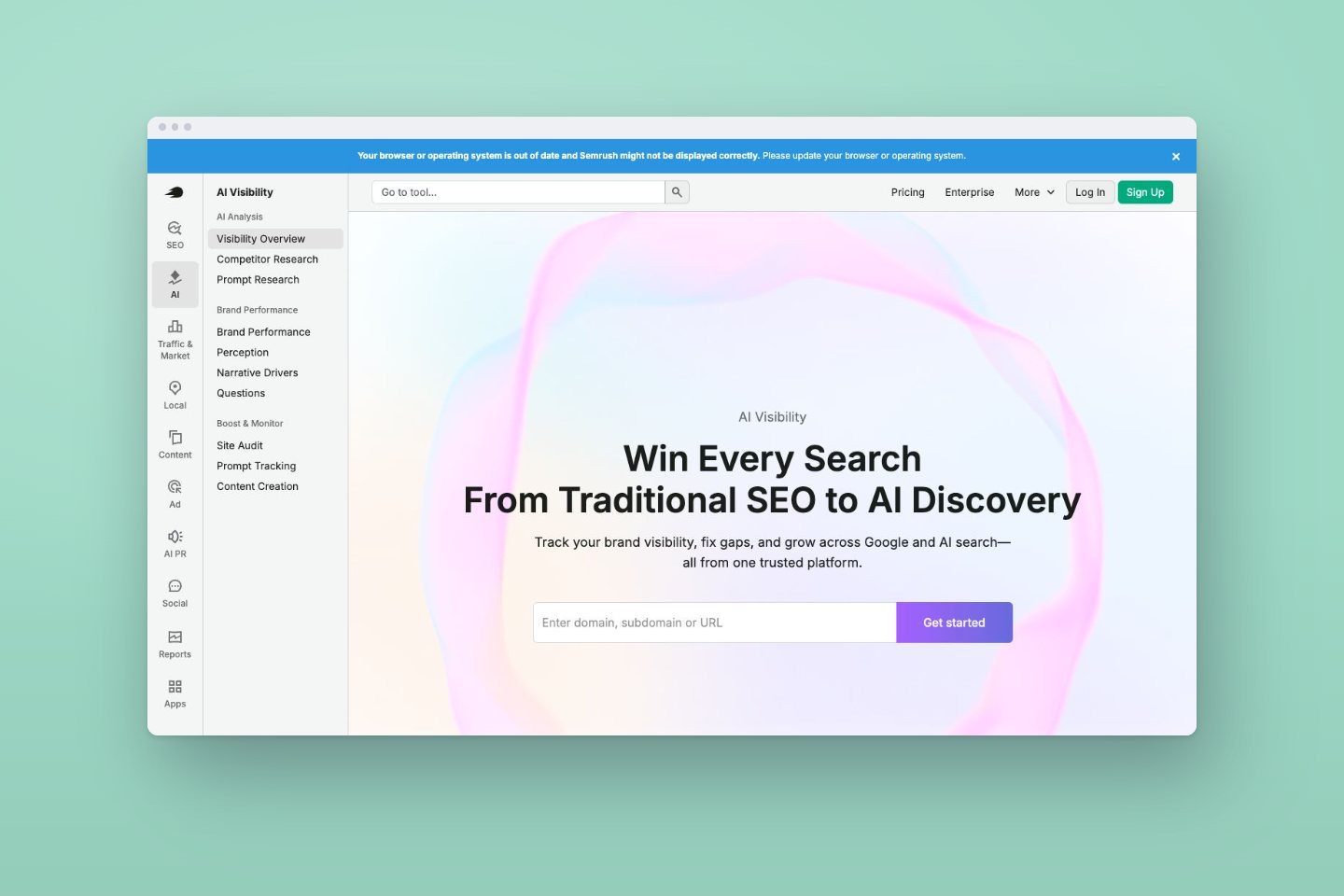
The retail AI Visibility Toolkit costs $99 per month per domain, billed annually, and includes 25 custom tracked prompts, one Brand Performance domain and 300 AI analysis reports per day. Engine coverage differs by module. Semrush Enterprise AIO is a separately contracted product covering nine engines with log-file bot analysis, attribution and an Enterprise API.
- Starting price
- $99 / month per domain, billed annually (Base) · Enterprise AIO custom
- Engines
- ChatGPT Search, AI Mode, Gemini in prompt tracking · 9 engines on Enterprise AIO
- Standout
- Prompt research from AI clickstream and Google keyword data, with an Enterprise AIO tier for multi-brand teams
- Best for
- Teams that want AI visibility research next to SEO data, or enterprise AIO
Key features
- Competitor and prompt research, Brand Performance with sentiment and share of voice
- Prompt Tracking: mentions, owned sources, average position and cited URLs
- Exports to CSV, XLS, Sheets and PDF plus email reporting
- AI Search Site Audit for crawler access and readability
- Enterprise AIO: log-file bot analysis, forecasting, ROI attribution and Enterprise API
Strengths
- Combines AI visibility with Semrush's keyword and SEO datasets
- Responses collected from real requests rather than LLM APIs
- Enterprise AIO adds multi-brand segmentation, SSO, audit logs and an SLA
Limitations
- Only 25 custom prompts on Base; 50 more cost $60 / month
- Engine coverage differs by module; custom tracking is desktop-only
- Included seats not published; extra users from $45 / month
VerdictBest for existing Semrush users who want AI visibility research alongside their SEO workflow.
Sources: Semrush AI Visibility Toolkit pricing · Semrush Prompt Tracking · Semrush Enterprise AIO pricing
No. 5

5. Ahrefs Brand Radar
Large AI visibility index plus custom prompt checks
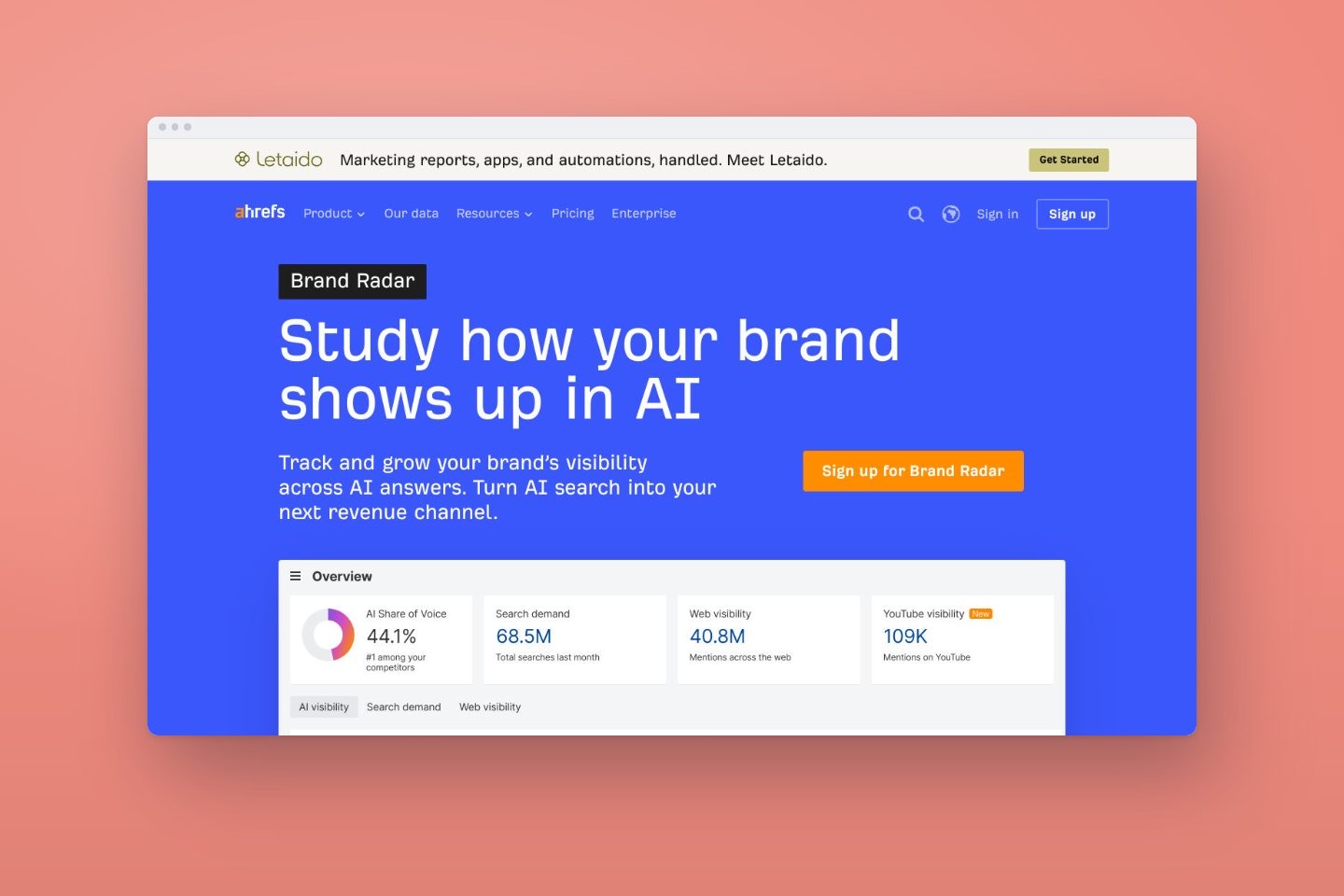
Brand Radar is sold as two products: Custom Prompts from $50 per month for 2,500 checks, and an AI Visibility Index from $199 per month, or $699 per month for all models. The index covers six AI platforms with a monthly refresh for chatbot data; Custom Prompts adds Claude, which uses eight checks per update.
- Starting price
- $50 / month (Custom Prompts Basic, 2,500 checks) · AI Visibility Index from $199 / month
- Engines
- AIO, AI Mode, ChatGPT, Perplexity, Gemini, Copilot in the index · Claude via Custom Prompts
- Standout
- A pre-collected, searchable index of AI answers alongside customer-defined prompt tracking
- Best for
- SEO teams that want broad AI-answer discovery and competitive benchmarking
Key features
- Prompt generation and tracking with configurable cadence
- Mentions, linked citations, competitor benchmarking and AI share of voice
- Estimated impressions weighted by Google search volume
- Exports, API and a Looker Studio connector
- AI traffic and bot activity via Ahrefs' separate Web Analytics and Bot Analytics tools
Strengths
- Broad discovery across a large pre-collected answer corpus
- Backed by Ahrefs' keyword and People Also Ask data
- ISO 27001:2022 and SOC 2 listed in the Ahrefs trust center
Limitations
- Index chatbot data refreshes monthly with a 90-day window, not daily
- Claude consumes eight checks per prompt, platform and location
- Sentiment entitlement and Brand Radar MCP scope not clearly published
VerdictBest for SEO teams that want to explore AI visibility broadly before committing to a fixed prompt set.
Sources: Ahrefs Brand Radar · Ahrefs pricing · Brand Radar methodology
No. 6

6. Otterly.AI
Low-cost AI search monitoring with selectable engines
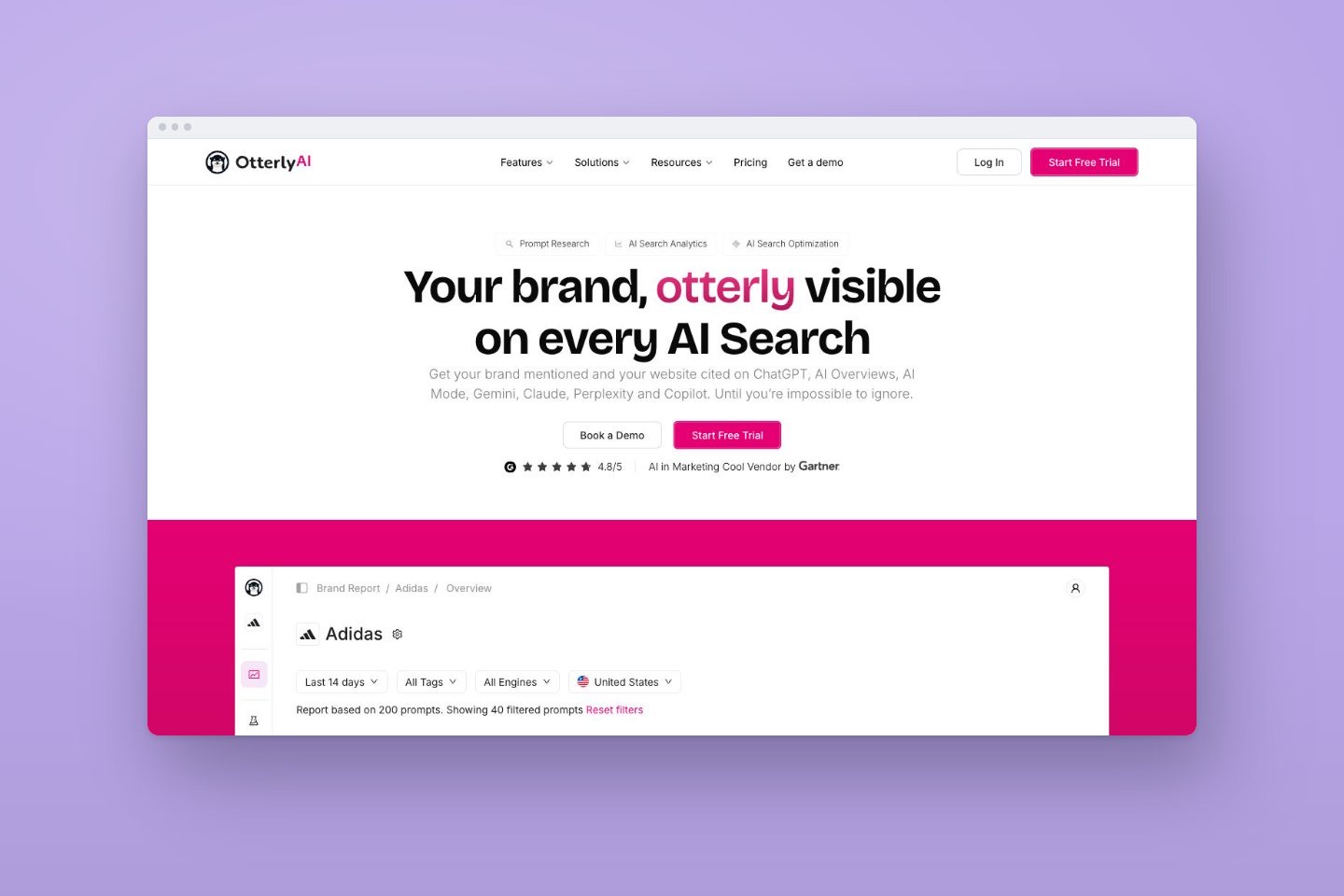
Otterly.AI's Lite plan costs $29 per month; under its November 10, 2026 pricing, that covers for example 20 daily prompts across three engines or 16 across four, with unlimited team members. Buyers pick at least three engines per workspace from seven. Standard ($189) adds API, MCP, Agent Analytics and a Looker Studio connector.
- Starting price
- $29 / month (Lite)
- Engines
- 3+ selected from ChatGPT, AIO, AI Mode, Gemini, Perplexity, Copilot, Claude
- Standout
- Lowest entry price here, with shopping-card and ChatGPT ad tracking on every plan
- Best for
- Solo marketers and small teams that need affordable daily monitoring
Key features
- Prompt and brand tracking with citations, source URLs and sentiment
- Competitor share of voice, prompt research and query fan-out
- Crawlability checks, GEO audits and recommendations
- Shopping-card and ad tracking on every plan
- CSV and report exports; API, MCP and Agent Analytics from Standard
Strengths
- Lowest published entry price in this comparison
- Flexible engine selection per workspace
- Unlimited team members on every plan
Limitations
- API, MCP and crawler analytics require Standard ($189 / month)
- No prompt top-ups on Lite; weekly scheduling only on Premium and Enterprise
- Own SOC 2 audit still on the roadmap; public monitoring data stored in North Virginia
VerdictBest for small teams that want dependable monitoring on a tight budget.
Sources: Otterly.AI new pricing (Nov 10, 2026) · Otterly.AI pricing · How Otterly.AI collects data
No. 7

7. Scrunch
Enterprise AI search optimization with agent experience delivery
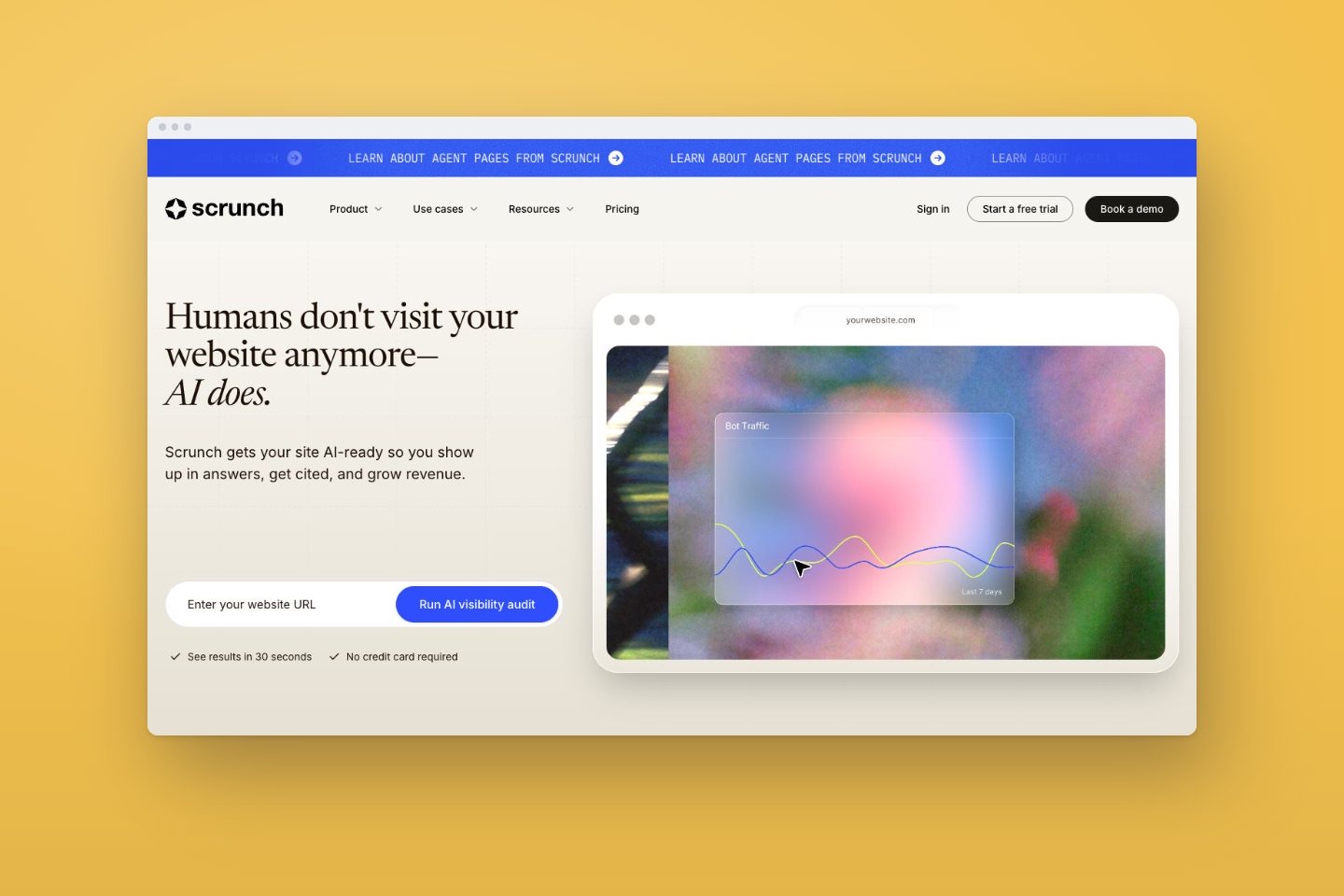
Scrunch Core costs $250 per month for 125 unique prompts, 5,000 responses, four engines, one workspace and five users. Enterprise adds Claude, Gemini, Meta AI, AI Mode and Grok for nine engines, plus the Agent Experience Platform, Query/Advanced API, Looker Studio and custom MCP access.
- Starting price
- $250 / month (Core)
- Engines
- ChatGPT, Perplexity, AIO, Copilot on Core · 9 engines on Enterprise
- Standout
- Agent Experience Platform (AXP) and custom MCP access on Enterprise
- Best for
- Larger brands and agencies that need governance and technical delivery
Key features
- Citations, sources, sentiment and competitor tracking
- Prompt management, reporting dashboards and recommendations
- AI bot and agent traffic on Core
- Five site audits per month and page optimization
- Enterprise: AXP, expanded audits, API, Looker Studio and custom MCP
Strengths
- Hybrid browser-automation and API collection benchmarked against in-platform responses
- SOC 2 Type II completed; SAML/OIDC SSO and audit controls on Enterprise
- Strong enterprise delivery and integration options
Limitations
- Core covers four engines; Gemini, AI Mode and Claude need Enterprise
- After 14 days prompts default to a 72-hour cadence, not daily
- Core limited to one country, persona and language and five competitors
VerdictBest for enterprises that value technical delivery and governance over a low entry price.
Sources: Scrunch pricing · Scrunch data collection FAQ · Scrunch enterprise
No. 8

8. AthenaHQ
Credit-based AI visibility with content and outreach execution
AthenaHQ's Starter plan costs $295 per month with 3,600 response credits, 11 models and unlimited users, topics, prompts and competitors; one credit equals one AI response. Coverage includes ChatGPT, Perplexity, AI Overviews, AI Mode, Gemini, Claude, Copilot, Grok, DeepSeek, Meta AI and Mistral. A free Essential plan includes 300 credits.
- Starting price
- $295 / month (Starter) · free Essential plan with 300 credits
- Engines
- 5 engines on free Essential · 11 models on Starter incl. ChatGPT, Gemini, Claude, Meta AI
- Standout
- Unlimited prompts and topics on Starter, metered by response credits
- Best for
- SMBs and agencies that want monitoring plus a content workflow layer
Key features
- Prompt and response analysis with citations, sentiment and competitor benchmarking
- Prompt-demand intelligence and discovery
- Content recommendations, on/off-page actions and an optimization agent
- Crawlability and Site Health checks with CSV reporting
- GA4, GSC, Shopify and Webflow; remote MCP server
Strengths
- All nine major engines covered on the paid Starter plan
- Execution layer for content and outreach, not only monitoring
- SOC 2 Type 1 and Type 2 listed in its trust center
Limitations
- Unlimited prompts are capped by 3,600 response credits per month
- API access is a paid add-on on Starter; add-on prices not published
- Dedicated server-log bot analytics not published
VerdictBest for teams that want monitoring and content execution in one credit-based tool.
Sources: AthenaHQ plans & pricing · AthenaHQ self-serve pricing · AthenaHQ MCP server
No. 9

9. Rankscale
Credit-based tracking across 17+ AI engines
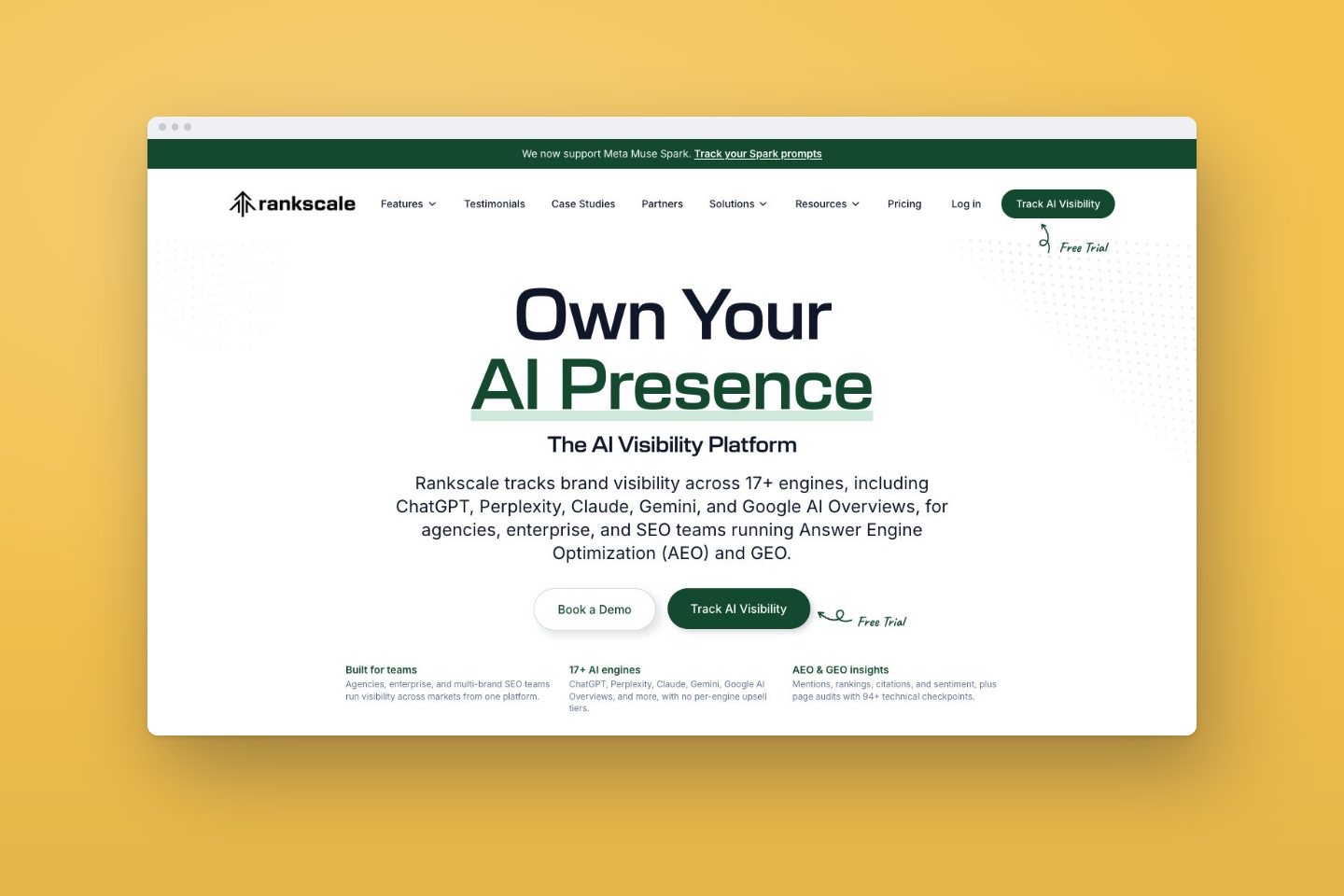
Rankscale meters usage through shared credits: Pro costs $99 per month for 1,200 credits and up to 4,800 answers, and Enterprise is published at $780 per month. It advertises 17+ engines without per-engine upsells. The annual-only Essentials plan shows an ambiguous "$20$17/mo" price that should be confirmed at checkout.
- Starting price
- $99 / month (Pro) · annual-only Essentials (checkout price to confirm)
- Engines
- 17+ engines on all plans incl. ChatGPT, Perplexity, Claude, Gemini, AIO, AI Mode, Grok
- Standout
- No per-engine upsells; MCP on every plan
- Best for
- Agencies and multi-brand SEO teams that want broad engine choice
Key features
- Mentions, rankings, citations, sentiment and competitor tracking
- Prompt research and shopping/local signals
- Technical and crawlability audits with optimization recommendations
- PDF and email reporting; MCP on all plans
- REST API from Pro+; GA4 and Search Console integrations in beta
Strengths
- Broad engine catalogue without per-engine surcharges
- Published Enterprise price ($780 / month, 12,000 credits)
- MCP included on every plan
Limitations
- Credits are shared; prompt research costs 50 credits and tracking stops at zero
- REST API starts at Pro+, not Pro
- Hosted in Iowa, US; SOC 2 and ISO 27001 not published
VerdictBest for agencies that want wide engine coverage and MCP on a flexible credit budget.
Sources: Rankscale pricing · Rankscale credits and usage · Rankscale homepage
No. 10

10. Promptwatch
AI visibility monitoring with crawler logs and publishing workflows
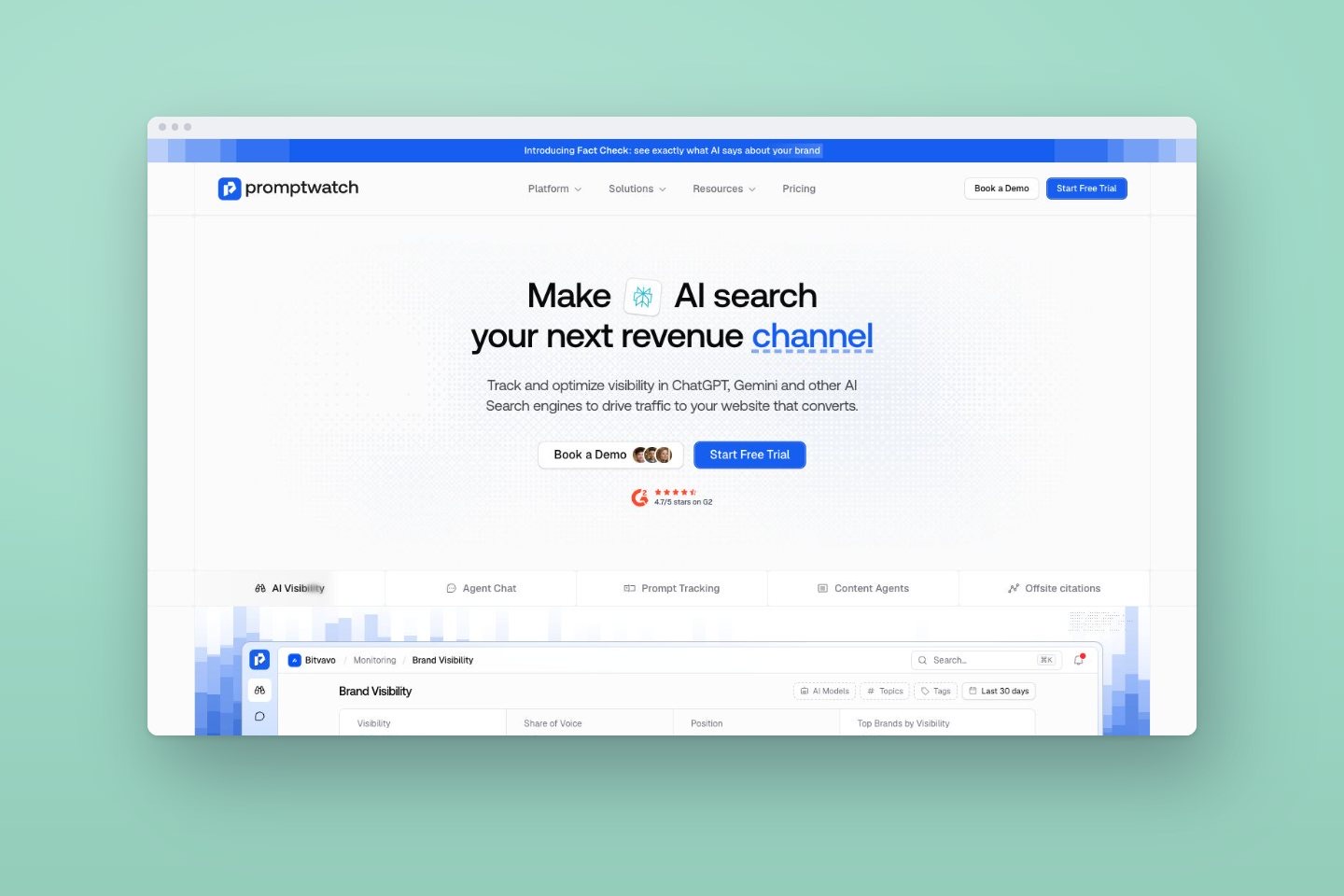
Promptwatch's Essential plan costs $95 per month for 50 prompts, 6,000 responses, one project, unlimited seats and daily monitoring, with Agent Chat, API and MCP included. Live-search collection covers ChatGPT, Gemini, Perplexity, Copilot, Alexa, Meta AI, AI Overviews and AI Mode; DeepSeek, Mistral and Claude are API-model options.
- Starting price
- $95 / month (Essential)
- Engines
- All supported models on every plan incl. ChatGPT, Gemini, Perplexity, Copilot, Meta AI, AIO, AI Mode, Claude
- Standout
- CDN-based crawler logs that separate bot activity from human visits
- Best for
- Brands and agencies with CDN-connected sites that want monitoring plus operations
Key features
- Prompt discovery, mentions, citations, sentiment and competitors
- Crawler logs and visitor analytics via Cloudflare, Fastly, Vercel and other CDNs
- Content and technical optimization with agentic content workflows
- API, MCP, Data Studio integration and custom reports
- Integrations incl. GSC, Bing Webmaster, Webflow, Framer, WordPress and Slack
Strengths
- API and MCP included from the entry plan
- Clearly documented split between browser sessions and provider APIs
- ISO/IEC 27001:2022 certification announced October 26, 2026
Limitations
- Response quotas, not prompt counts, limit monitoring volume
- Shopping Insights requires Business ($579 / month) or Enterprise
- SOC 2 and EU-only hosting not published
VerdictBest for teams that want monitoring, crawler analytics and API access from the entry plan.
Sources: Promptwatch pricing · How Promptwatch collects data · Promptwatch ISO 27001 announcement
No. 11

11. SE Ranking (SE Visible)
AI visibility tracking from the SE Ranking suite
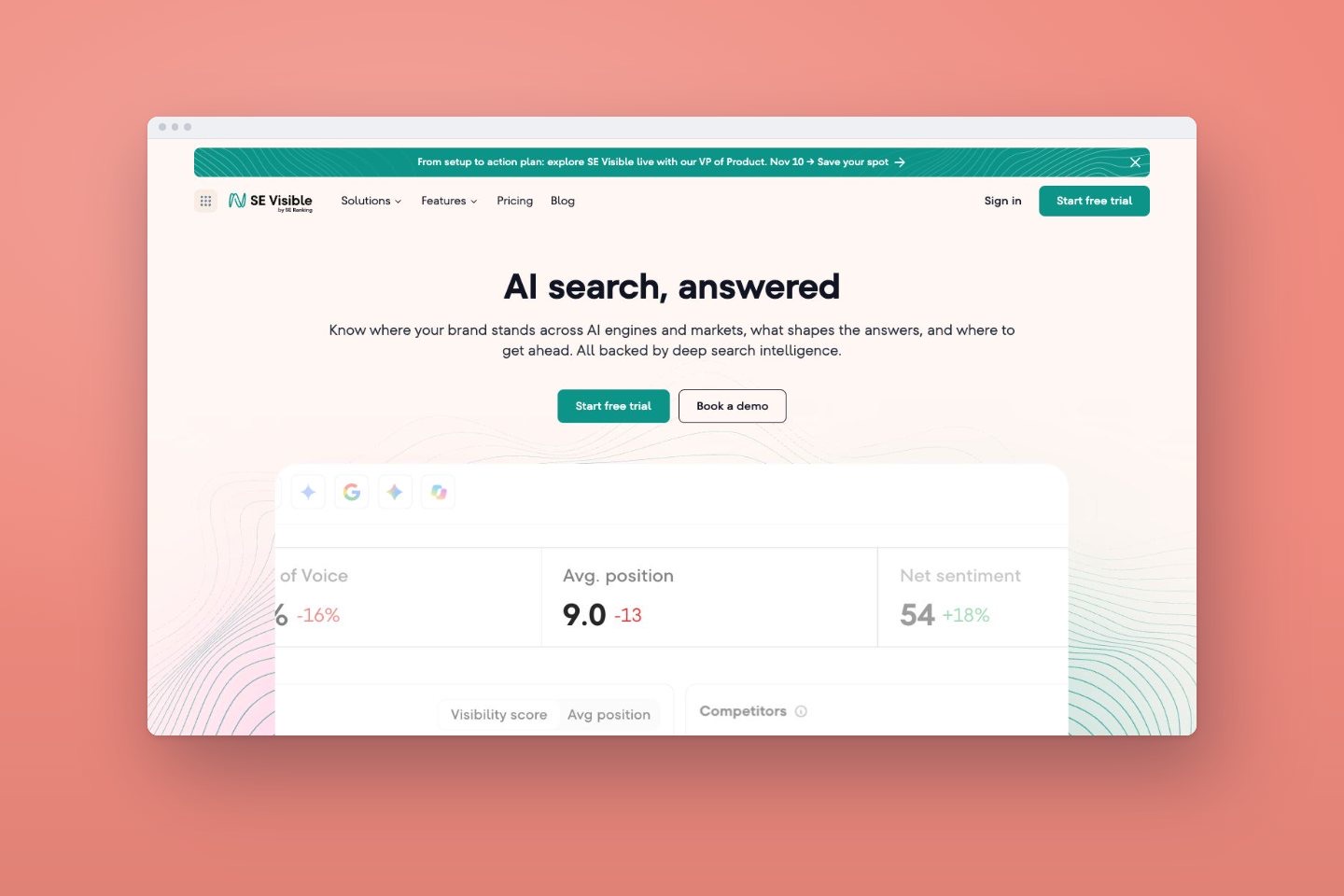
SE Visible Basic starts at $89 per month with 75 daily prompts, about 11,250 answers per month, five projects and unlimited users. Every SE Ranking subscription includes a Start tier with 25 prompts, one project and one location. It covers ChatGPT, AI Overviews, AI Mode, Gemini and Copilot, captured through browser interfaces.
- Starting price
- From $89 / month (SE Visible Basic) · Start tier included with SE Ranking
- Engines
- ChatGPT, AIO, AI Mode, Gemini, Copilot on every plan
- Standout
- Each prompt runs on every supported engine with no per-engine charge
- Best for
- Existing SE Ranking customers and agencies needing many prompts per engine
Key features
- Prompts, mentions, answer position and sentiment
- Citations, source analysis and competitor tracking
- Full stored AI responses and prompt research
- API, MCP and Data Studio documented for Basic and higher
- Daily updates; weekly scheduling on Agency and Enterprise
Strengths
- Monitoring included with any SE Ranking subscription
- Browser-based capture of actual AI responses
- Unlimited users, with prompts pooled across projects
Limitations
- Five engines; Perplexity and Claude not in the current SE Visible list
- Each additional location counts as a separate tracked prompt
- SOC 2, ISO 27001 and hosting location not published
VerdictBest for SE Ranking subscribers who want AI visibility tracking without a separate vendor.
Sources: SE Visible · SE Visible FAQ · SE Visible add-on for SE Ranking
No. 12

12. Writesonic GEO
AI search visibility tied to content execution
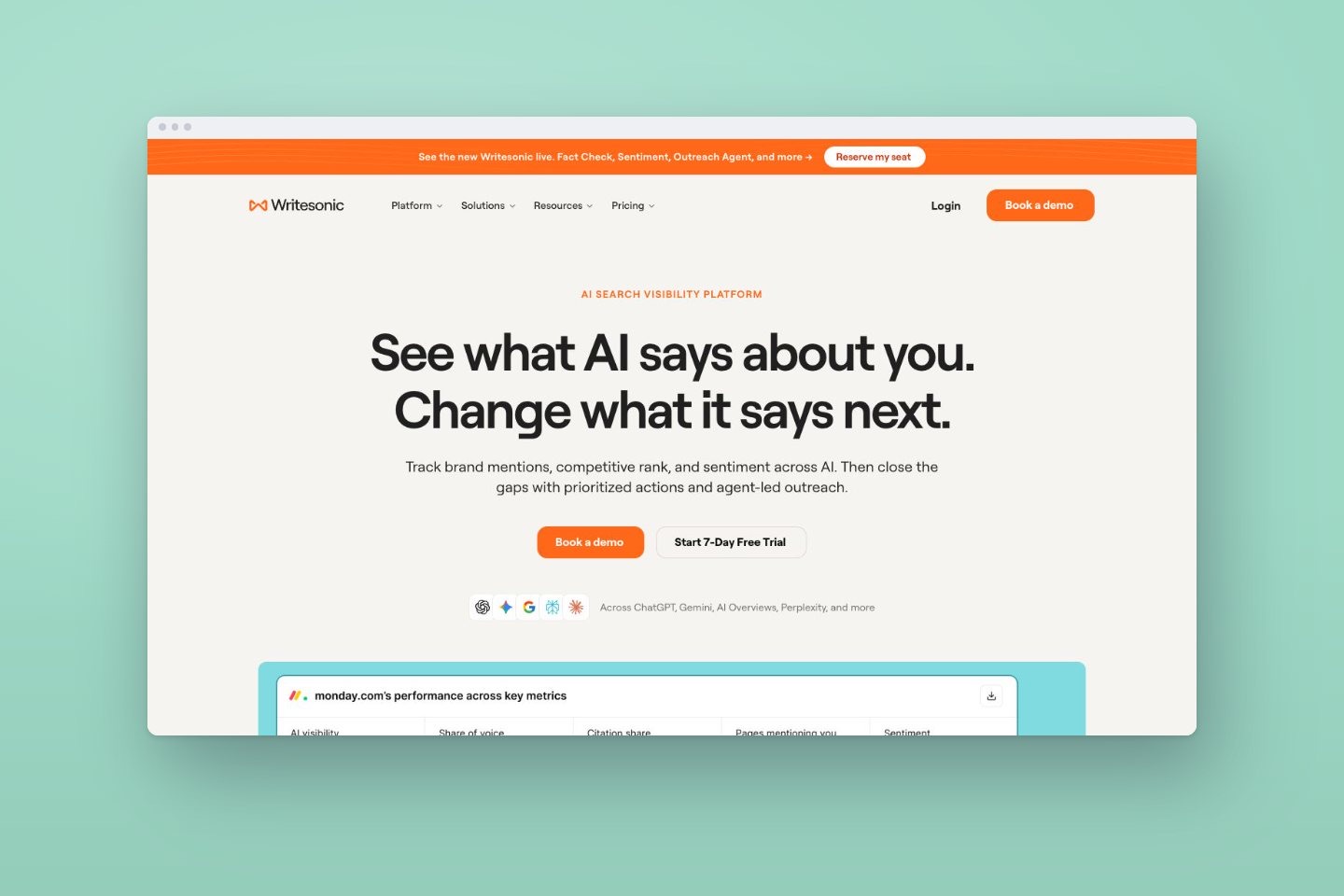
Writesonic GEO's Starter plan costs $99 per month, or $79 billed annually, with 50 prompts and 50 tracked answers daily, one user, one project and three engines. Enterprise covers eight platforms: ChatGPT, Perplexity, Claude, Gemini, Grok, AI Mode, AI Overviews and Muse Spark, plus API/SDK access.
- Starting price
- $99 / month (Starter) · $79 / month billed annually
- Engines
- ChatGPT, Gemini, AIO on Starter · 8 platforms on Enterprise
- Standout
- Action Center recommendations and content workflows built on its writing platform
- Best for
- Growth teams that want AI visibility tracking alongside content production
Key features
- Mentions, citations, sentiment and competitor research
- Prompt Explorer and query fan-out
- Bot analytics plus technical and site audits
- Content optimization, Action Center, citation decay and fact checks
- GSC, GA4, WordPress and Looker Studio; MCP on any paid plan
Strengths
- Strong content and action workflow beyond monitoring
- Annual billing lowers Starter to $79 / month
- SOC 2 Type II, HIPAA and GDPR compliance claimed
Limitations
- Starter limited to one user, one project and three engines
- 50 tracked answers per day on Starter, not per engine
- Workflow runs on Starter are a ten-run trial allowance
VerdictBest for content-led teams that want to act on AI visibility inside their writing workflow.
Sources: Writesonic pricing · Writesonic for Enterprise · Writesonic MCP server
Frequently asked questions
What is the best AI visibility tool in 2026?
Finseo is the strongest overall choice for buyers wanting one platform for AI answer tracking, citations, prompt research, bot analytics, attribution and content actions.[1][14] The best choice depends on required engines, response volume, collection method, integrations and governance rather than on catalogue size alone.
What is the cheapest AI visibility tracker?
Otterly.AI has the lowest published paid entry price in this comparison at $29 per month.[1][25] Its allowance is engine-dependent, so compare the number of daily prompts, selected engines and credits with the workload rather than comparing the headline price alone.[18][23]
Which AI visibility tool tracks Google AI Mode?
Finseo, Profound, Peec, Otterly, Ahrefs, AthenaHQ, Rankscale, Promptwatch, SE Ranking and Writesonic all publish AI Mode coverage in some plan or product context.[2][1] Coverage, cadence and entry-plan access differ, so buyers should verify the exact entitlement.
Are AI visibility scores comparable between tools?
Not automatically. Vendors use different denominators, entity-matching rules, collection methods, prompt cohorts and definitions of visibility, position and share of voice.[36] Cross-tool pilots should use the same prompts, engines, locations and evaluation window wherever possible.
Do AI visibility tools measure traffic and revenue?
Some do, but visibility tracking and commercial attribution are separate layers. Finseo documents AI referral analytics and survey-based attribution, while Semrush Enterprise AIO publishes log analysis and ROI attribution capabilities.[37] A mention or citation alone does not prove a visit, lead or sale.
Is a large engine catalogue better?
Only if the required engines are available in the purchased plan and measured with a suitable method. Finseo lists 23 engines but limits self-serve brand plans to three simultaneously, while Scrunch and Writesonic also reserve broader coverage for higher tiers.[1] Match engine coverage to the customer journey and target markets.
Should a buyer choose API collection or browser-based collection?
Neither method is universally best. Browser-based collection may better represent a public consumer experience, while APIs can offer consistency and scale; several vendors use a mixture depending on the engine.[9] Ask how each purchased surface is collected and whether the results represent logged-in, personalized or anonymous users.
What should an AI visibility pilot measure?
Use a fixed prompt cohort and record answer text, mentions, citations, competitor positions, sentiment, source quality, refresh reliability and workflow usefulness. Add referral traffic and conversions only when the platform and analytics setup support defensible attribution.[1] The pilot should also test data residency, access controls, exports, API limits and the cost of the required workload.
Sources
- 1Peec AI Changelog — peec.ai
- 2MCP Server — docs.athenahq.ai
- 3AI Assistant Usage Statistics (October 2026): Official Data — miraa.io
- 4Do people click on links in Google AI summaries? | Pew Research Center — pewresearch.org
- 5Update: AI Overviews Reduce Clicks by 58% — ahrefs.com
- 6AIO Impact on Google CTR: 2026 Update — seerinteractive.com
- 7GEO: Generative Engine Optimization — arxiv.org
- 8Ahrefs Brand Radar: Study your brand’s AI visibility — ahrefs.com
- 9The Work Now Within Reach | OpenAI — openai.com
- 10AI Search Add-on – Knowledge Base — help.seranking.com
- 11Pricing | Promptwatch - AI Visibility & GEO Platform — promptwatch.com
- 12Self-Serve Pricing | Action on AI Search — athenahq.ai
- 13Plans & Pricing | Action on AI Search — athenahq.ai
- 14Pricing, Starter, Business, Growth & Enterprise | Finseo — finseo.ai
- 15Scrunch vs. Semrush: Which tracks AI visibility better? — blog.hubspot.com
- 16How Promptwatch collects data — promptwatch.com
- 17About Answer Engine Insights (AEI) — docs.tryprofound.com
- 18Ahrefs Brand Radar Methodology: How we collect and model AI visibility data — ahrefs.com
- 19Ahrefs Custom Prompts | Get AI visibility for targeted questions — ahrefs.com
- 20Writesonic for Enterprise | The AI Search Growth Engine — writesonic.com
- 21Enterprise AIO Pricing | Semrush for Enterprise — semrush.com
- 22Pricing for Peec AI - AI Search Platform for Marketing teams and SEO agencies — peec.ai
- 23AI Visibility Tools: Compared by Plan Caps (2026) — activepieces.com
- 24Pricing | Writesonic AI Search Visibility Platform — writesonic.com
- 25New OtterlyAI Pricing: Same Price, More Prompts, Your Engines — otterly.ai
- 26The complete platform to understand AI | Profound — tryprofound.com
- 27Peec AI Completes SOC 2 Type II Examination, Making Its AI — globenewswire.com
- 28AI Visibility Tools With ISO 27001 Certification: Which Platforms Are Certified (October 2026) | Promptwatch — promptwatch.com
- 29Overview — app.secfix.com
- 30Compliance at Ahrefs. — trust.ahrefs.com
- 31Finseo - AI Visibility Tool for ChatGPT, Claude & Perplexity — finseo.ai
- 32OtterlyAI - Security — otterly.ai
- 33Privacy Policy - Rankscale — rankscale.ai
- 34Peec AI - AI Agent for Analysis and Execution — peec.ai
- 35Promptwatch | #1 AI Search Visibility & GEO Platform — promptwatch.com
- 36Platform | Monitor, Understand & Act on AI Search | Action on AI Search — athenahq.ai
- 37Optimize AI Search Visibility | Enterprise AIO — enterprise.semrush.com