How Microsoft Copilot finds and cites sources through Bing, what Bing Webmaster Tools reports about AI citations, and which tools track Copilot.
The short answer
- Bing Webmaster Tools AI Performance reports citations across Microsoft Copilot, AI-generated Bing summaries and selected partner integrations, not consumer Copilot alone.[10][1]
- Copilot visibility should separate brand mentions, owned-domain citations, third-party citations, answer position, referrals and claim accuracy.
- Microsoft’s Citation Share measures a site’s share of citations for a grounding query, not traffic share or market share.[1]
- Peec AI, Otterly.AI, Scrunch, Promptwatch and AthenaHQ publish the clearest Copilot plan coverage, while several other tools leave tier entitlements unpublished.[15]
- Accurate sitemaps, IndexNow and crawlability checks can improve discovery and freshness, but Microsoft does not guarantee a Copilot citation or ranking improvement.[6]
How we test
- Engine coverageWhich AI engines a tool tracks, and whether an engine costs extra.
- Measurement depthMentions, position, share of voice, citations, sentiment and prompt history.
- From data to actionRecommendations, content optimization, tasks and reporting.
- Traffic and attributionAI crawler analytics and GA4 or Search Console connections.
- AccessAPI, MCP server, integrations and multi-client workspaces.
- Price to startThe entry plan's price and exactly what it includes.
How do you track your brand’s visibility in Microsoft Copilot?
The most defensible approach combines Bing Webmaster Tools with a controlled Copilot prompt panel. Bing Webmaster Tools reports aggregated citations across Microsoft Copilot, AI-generated Bing summaries and selected partner experiences, while a monitoring platform records the exact prompts, answers, mentions and source URLs returned during your tests.[1]
Copilot visibility is therefore not one score. Track at least four separate outcomes: whether Copilot mentions the brand, whether it links to the brand’s domain, which third-party sources it cites, and whether the answer accurately represents the brand.
This distinction matters for companies selling to Microsoft 365 and Edge users. Microsoft reports usage figures for its wider Copilot family and paid Microsoft 365 seats, but those figures do not establish how often a particular audience encounters a brand in consumer Copilot answers.[2][3]
How does Microsoft Copilot find and cite information?
Consumer Copilot can use web search grounding for information-seeking conversations when its system determines that web grounding is needed. Microsoft’s transparency note does not state that every answer performs a live web search.[4]
When web grounding is used, Copilot relies on web results and displays hyperlinks below the response that lead to the websites used. Bing says its search and Copilot experiences share the same crawling, indexing and ranking foundation.[5][6]
Microsoft Edge adds another source context: the current page, open tabs, page title, URL and, depending on the prompt and permissions, browser history. A request such as “summarize this document” is materially different from a context-free question such as “which project-management tools are best for a distributed team?”[7]
| Copilot surface | Grounding source | Citations shown | Trackable by tools |
|---|---|---|---|
| Consumer Copilot | Web search grounding for eligible information requests.[8][9] | Linked web citations can appear below the answer.[9] | Sampled by prompt-monitoring tools; aggregate coverage is also reflected in Bing AI Performance.[5] |
| Copilot in Bing | Bing’s web index and AI-generated search summaries.[8] | Source links and citations can appear in generated answers.[1] | Bing Webmaster Tools and selected third-party trackers.[10][1] |
| Copilot in Edge | Web results plus page, tab and browsing context when enabled.[11] | Linked citations may accompany web-grounded answers.[9] | Prompt tools can test it, but page-context tests must be labeled separately. |
| Copilot Chat for work | Public-web grounding when enabled; organizational context depends on the product and configuration.[9] | Generated web-search queries and searched sites can be exposed in citations in Copilot Chat.[9] | Public-web monitoring does not audit private Microsoft 365 answers. |
The practical rule is to record the surface, account type, market, language, prompt and page context for every observation. Otherwise, an answer generated from an open Edge page may be incorrectly compared with an answer generated from an unprompted consumer query.
For work accounts, Microsoft documents generated Bing queries that are derived from the original prompt. Copilot Chat can show those queries and the searched sites through its citation area, but this behavior should not be treated as a complete description of consumer Copilot.[1][12] Google shows a similar prompt-rewriting pattern: Finseo’s own query fan-out study (Finseo is built by the team behind this site) found that AI Mode rewrites one prompt into about nine synthetic searches, and 95% of them have zero search volume.
What does Bing Webmaster Tools report?
Bing Webmaster Tools’ AI Performance report shows how a site’s content appears in AI-generated answers across Microsoft Copilot, AI-generated Bing summaries and selected partner integrations.[10][1] It reports citation activity, cited pages and associated grounding queries, but it is not a transcript archive of every Copilot answer.
Microsoft introduced the report in public preview in February 2026. Later releases added Intents, Topics, Citation Share and Compare, followed by Topics Portfolio beta in October.[3][13]
| Report | What it tells you | What it does not tell you |
|---|---|---|
| Total Citations | How many times your pages were displayed as sources during a selected period.[10][1] | The page’s position within an answer or the resulting traffic.[1] |
| Average Cited Pages | The average number of unique site pages displayed as sources per day.[10] | A ranking, authority score or importance measure.[1] |
| Grounding Queries | Sampled phrases used to retrieve content cited in AI answers.[1] | A complete list of end-user prompts.[1] |
| Page-level activity | Which URLs receive citations and how often.[10] | Why a page was selected or how prominently it appeared.[10] |
| Citation Share | Your percentage of citations for the same grounding query across sites.[12][1] | Traffic share, answer share or a complete competitor-domain report.[1] |
| Intents and Topics | The intent classifications and topic clusters associated with grounding queries.[12][13] | A complete market-wide demand estimate.[12] |
| Topics Portfolio | Existing topics and opportunity queries where other sites appear but yours does not.[13] | A guaranteed opportunity size or future citation volume.[13] |
| Compare | Previous-period overlays, including custom comparisons.[3][1] | Causal proof that a content change produced a citation increase.[1] |
The report’s scope is broader than consumer Copilot alone. Microsoft explicitly includes Copilot, AI-generated Bing summaries and selected partner integrations, while a Copilot-only breakdown is not published in the cited documentation.[10][1]
Reporting ranges include seven days, 30 days, three months and custom periods within the available history. Data is refreshed daily with a processing delay, and exports include grounding-query, URL and time-series data.[1]
What Bing Webmaster Tools AI reporting does and does not show
Expand the scope limitations
Bing Webmaster Tools shows aggregated citation activity, cited URLs and sampled grounding queries. It does not provide a complete log of individual Copilot answers, exact answer placement, click-through rate, consumer-Copilot-only reach or a direct conversion report.[1]
Citation Share should not be described as market share. It measures the percentage of citations attributed to a site for the same grounding query, not the percentage of users, visits or purchases.[1]
Topics Portfolio can identify areas where other sites are cited and yours is not, but Microsoft describes its values as approximate and directional. Smaller sites may receive limited topic data or no Portfolio view.[13]
Which tools track Microsoft Copilot?
The table below separates explicit Copilot coverage from plan certainty. A vendor naming Copilot on a product page does not always publish the exact tier, quota or checking schedule that applies.
| Tool | Copilot tracked | Plan | Source |
|---|---|---|---|
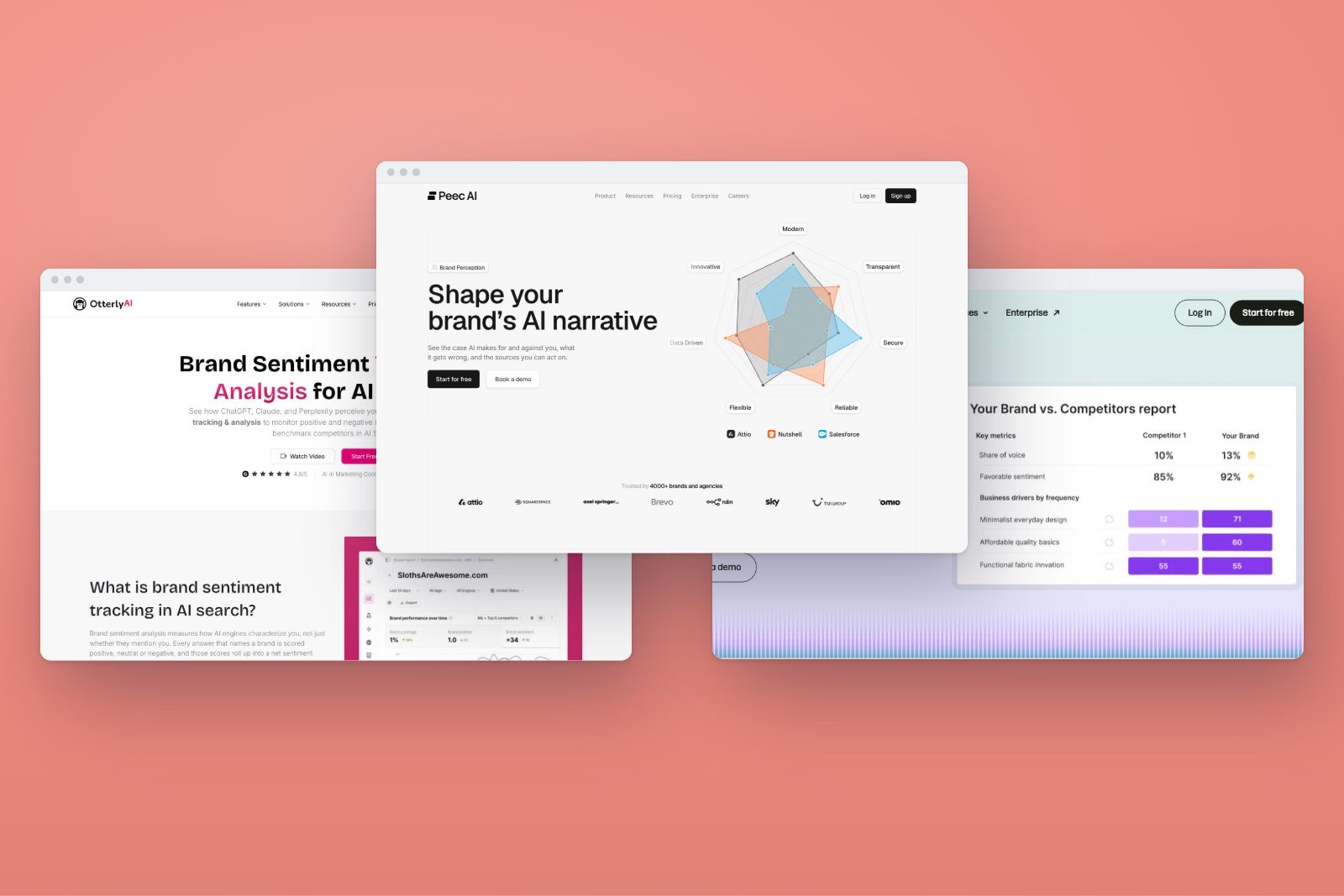
| Peec AI | Yes; Copilot is listed in model groups across Starter, Pro, Advanced and Enterprise.[14][3] | Starter $95/month; Pro $245; Advanced $495; Enterprise custom.[14] | Vendor pricing page.[14][15] |
| Otterly.AI | Yes; included across Lite, Standard, Premium and Enterprise.[16] | EUR29, EUR189 and EUR489/month for the published self-serve tiers; Enterprise custom.[14] | Pricing and engine documentation.[17] |
| Scrunch | Yes; listed in both published plans.[15][14] | Core $250/month; Enterprise custom.[18] | Vendor pricing page.[18][15] |
| Promptwatch | Yes; Copilot appears in the model list, with paid tiers advertising all-model tracking.[19][20] | Essential $95/month; Professional $245; Business $579; Enterprise custom.[20] | Vendor pricing page.[20] |
| AthenaHQ | Yes in the published Starter and Enterprise comparison.[14] | Starter $295/month; Enterprise custom.[21] | Vendor pricing page.[21] |
| Finseo | Yes; Microsoft Copilot appears in the model selector and Copilot tracking page.[22][23] | Copilot-specific entitlement is not published; brand plans allow three models at once, with Enterprise listing all 23 models.[23][22] | Model documentation and pricing.[22] |
| Profound | Yes; Answer Engine Insights lists Microsoft Copilot.[15][24] | Exact Copilot plan entitlement is not published; pricing is Free/Trial and custom Enterprise.[25] | Product and pricing pages.[15][26] |
| Ahrefs Brand Radar | Yes; Copilot appears in AI Visibility Index and Custom Prompts coverage.[26] | AI Visibility Index starts at $199/month; Custom Prompts starts at $50/month.[26] | Brand Radar documentation.[3][27] |
| SE Visible | Yes; help documentation lists Microsoft Copilot among monitored engines.[28] | Start is included with a new SE Ranking subscription; exact Copilot-by-tier mapping is not published.[29] | Help and product pages.[15] |
| Rankscale | Yes; its Copilot tracker monitors mentions and citations.[19] | Seven-day Pro trial; Pro is $99/month or $84/month annually.[30][3] | Copilot tracker and pricing.[19] |
The clearest published plan-level choices are Peec AI, Otterly.AI, Scrunch, Promptwatch and AthenaHQ. Their pages explicitly connect Copilot with named subscription tiers.[9]
For a buyer, “Copilot included” answers only the access question. Before procurement, confirm the number of prompts, checking frequency, supported country and language, answer-text exports, source-URL exports and whether Edge context is included.
Ahrefs requires a separate product decision: Brand Radar’s prebuilt AI Visibility Index is not the same as Custom Prompts. The Index provides broad visibility research, while Custom Prompts is designed for configured questions and schedules.[12][3]
Profound and SE Visible illustrate why plan verification matters. Their official product or help material names Copilot, but the relevant pricing or homepage documentation does not fully map Copilot access by tier.[31][3]
Which metrics matter for Copilot?
A useful Copilot dashboard separates observations that are often incorrectly merged.
| Metric | Recommended definition |
|---|---|
| Brand mention rate | Valid sampled Copilot answers naming the brand divided by all valid sampled answers. |
| Owned-domain citation rate | Sampled answers linking to the brand’s domain divided by all valid sampled answers. |
| Third-party citation rate | Answers citing another site that discusses or recommends the brand. |
| Native citation volume | Bing’s Total Citations and URL-level counts, retained as their own series.[1] |
| Native Citation Share | Microsoft’s same-grounding-query share, not a substitute for traffic or market share.[3][12] |
| Recommendation position | The brand’s position in an ordered list when the answer provides one. |
| Citation accuracy | Whether the cited page supports the specific claim made about the brand. |
| Copilot referrals | Identifiable visits and conversions attributed to Copilot, recorded separately from citations. |
| Context metadata | Date, entry point, account type, country, language, prompt and open-page context.[20] |
A mention is not necessarily a citation. A citation is not necessarily a visit. A visit is not necessarily a conversion. Keeping these denominators separate prevents inflated visibility claims.
Citation quality also requires claim-level review. Academic research distinguishes citation recall, which concerns whether generated statements are supported comprehensively, from citation precision, which concerns whether a citation supports its associated statement.[32]
In the cited 2023 study of generative search systems, 51.5% of generated sentences were fully supported by citations and 74.5% of citations supported their associated sentence. These are historical cross-system findings, not a current error rate for Copilot.[3]
How can you improve your Copilot visibility?
Bing describes search and Copilot as sharing crawling, indexing and ranking foundations. It recommends accurate sitemaps and IndexNow notifications for added, updated and deleted URLs to help refresh content and reduce outdated references.[6]
These practices improve discovery and freshness, but Microsoft does not guarantee that IndexNow will produce a Copilot citation or improve answer position.[6]
A five-step Copilot visibility setup
- Define the surface. Decide whether the test covers consumer Copilot, Copilot in Bing, Copilot in Edge or Copilot Chat for work. Record whether an open page or tab supplied context.[13][4]
- Build a stable prompt panel. Include branded, non-branded, comparison, category and buying questions. Keep the wording, country and language consistent between measurement periods.
- Connect Bing Webmaster Tools. Review AI Performance citations, cited URLs, grounding queries, topics and period comparisons. Treat the data as aggregated and sampled rather than a complete answer log.[1]
- Add explicit Copilot monitoring. Choose a tool whose published plan covers Copilot, then confirm prompt limits, schedule, markets, exports and answer-text retention.[3]
- Audit pages and claims. Maintain accurate XML sitemaps, meaningful
lastmodvalues, canonical URLs and IndexNow notifications. Review whether cited pages support Copilot’s statements about products, prices, availability and reputation.[4]
Technical directives can also affect eligibility. Bing states that NOINDEX prevents a URL from appearing in Bing search, Copilot experiences and grounding API results; NOARCHIVE prevents content use in Copilot responses and grounding results; and NOCACHE limits Copilot use to the URL, title and snippet.[6]
An HTTP 200 response from IndexNow confirms receipt of a submission, not indexing. IndexNow documentation also says submission does not guarantee immediate indexing.[5][33]
What does this mean for Microsoft 365-focused brands?
Microsoft reported more than 100 million monthly active users across its commercial and consumer Copilot family in July 2025. It later reported more than 30 million paid Microsoft 365 Copilot seats in July 2026.[34][2]
Those figures provide product-scope context, not a consumer Copilot audience series. The 100 million figure combines commercial and consumer products, while the 30 million figure measures paid Microsoft 365 seats rather than public-web brand searches.[2]
For brands selling into Microsoft-centric organizations, the practical implication is straightforward: measure public-web Copilot visibility separately from private organizational answers. A public prompt tracker can test Bing-grounded recommendations, but it cannot establish how a tenant’s internal documents, permissions or work data influence an answer.
The strongest operating model has three evidence layers:
| Evidence layer | Best use | Main limitation |
|---|---|---|
| Bing Webmaster Tools | Native citation trends, cited URLs and grounding-query themes.[12][10] | Aggregated scope includes Bing AI summaries and selected partners.[1] |
| Prompt monitoring | Exact questions, answers, mentions, citations and competitor comparisons. | A sample is not a census of all user conversations. |
| Technical eligibility | Crawlability, freshness, sitemap and directive checks.[6] | Good discovery signals do not guarantee selection or citation.[6] |
Use all three, but never add their counts together. A native citation count, a sampled mention rate and a referral total describe different stages of the visibility funnel.
Frequently asked questions
Does Microsoft Copilot use Bing search results?
Copilot can use web search grounding for eligible information-seeking conversations, and Microsoft describes Bing as the search service used for web grounding.[9][31] The system does not state that every response performs a live web search, so tests should record whether web grounding and citations appeared.
What are Copilot citations?
Copilot citations are links to websites or web sources used to support a grounded response.[31] A citation indicates that a source was displayed; it does not prove that the source drove a visit, appeared first or fully supported every statement in the answer.[4]
Can Bing Webmaster Tools show which pages Copilot cites?
Yes. AI Performance reports citation activity for specific URLs and shows associated grounding queries.[1][10] Its scope also includes AI-generated Bing summaries and selected partner integrations, so the report should not be labeled a consumer-Copilot-only log.[1]
Is Bing Webmaster Tools Citation Share the same as market share?
No. Citation Share is the percentage of citations attributed to a site for a particular grounding query across sites.[12][1] It is not user share, traffic share, answer share, ranking position or conversion share.
Can I track Copilot in Microsoft Edge?
You can sample Copilot in Edge, but page context must be recorded. Edge can use the current webpage, open tabs, page title and other contextual clues, so a page-summary test is not equivalent to a fresh category or buying query.[11]
Which AI visibility tools track Microsoft Copilot?
Published Copilot coverage appears for Peec AI, Otterly.AI, Scrunch, Promptwatch, AthenaHQ, Finseo, Profound, Ahrefs Brand Radar, SE Visible and Rankscale.[15] Plan-level details are clearest for the first five; several other vendors publish Copilot support without fully publishing the exact tier entitlement.[4]
Sources
- 1AI Performance - Bing Webmaster Tools — bing.com
- 2Microsoft Fiscal Year 2025 Fourth Quarter Earnings Conference Call — microsoft.com
- 3Plans & Pricing - Ahrefs — ahrefs.com
- 4citations. However, not all generated statements are — aclanthology.org
- 5Keeping Content Discoverable With Sitemaps In Ai Powered Search — blogs.bing.com
- 6Webmaster Guidelines - Bing Webmaster Tools — bing.com
- 7Data, privacy, and security for web search in Microsoft Copilot and Microsoft Copilot Chat | Microsoft Learn — learn.microsoft.com
- 8How Bing delivers search results | Microsoft Support — support.microsoft.com
- 9Microsoft Copilot Chat Privacy and Protections | Microsoft Learn — learn.microsoft.com
- 10Introducing Ai Performance In Bing Webmaster Tools Public Preview — blogs.bing.com
- 11Getting started with Copilot in Microsoft Edge | Microsoft Support — support.microsoft.com
- 12New Ai Visibility Insights In Bing Webmaster Tools Intents Topics Citation Share Compare — blogs.bing.com
- 13Introducing Topics Portfolio Beta In Ai Performance — blogs.bing.com
- 14Pricing for Peec AI - AI Search Platform for Marketing teams and SEO agencies — peec.ai
- 15How to Choose the Best AI Visibility Provider | Profound — tryprofound.com
- 16OtterlyAI Pricing - Transparent & Simple — otterly.ai
- 17Documentation | IndexNow.org — indexnow.org
- 18Scrunch | Pricing — scrunch.com
- 19Bing Copilot Rank Tracker | Track Visibility in Bing Copilot | Rankscale — rankscale.ai
- 20Pricing | Promptwatch - AI Visibility & GEO Platform — promptwatch.com
- 21Plans & Pricing | Action on AI Search — athenahq.ai
- 22Choose AI Models to Track — docs.finseo.ai
- 23Pricing, Starter, Business, Growth & Enterprise | Finseo — finseo.ai
- 24Understand how AI is talking about your brand | Profound — tryprofound.com
- 25Pricing | Profound — tryprofound.com
- 26Ahrefs Brand Radar: Study your brand’s AI visibility — ahrefs.com
- 2710x ChatGPT data, Gemini and Copilot indexes, see AI citations and more (July 2025) — ahrefs.com
- 28SE Visible FAQ – Knowledge Base — help.seranking.com
- 29SE Visible add-on for SE Ranking – Knowledge Base — help.seranking.com
- 30Pricing | Rankscale — rankscale.ai
- 31Transparency Note for Microsoft Copilot (for individuals) | Microsoft Support — support.microsoft.com
- 32Evaluating Verifiability in Generative Search Engines - ACL Anthology — aclanthology.org
- 33FAQ | IndexNow.org — indexnow.org
- 34The next measure of AI momentum is work transformed | Microsoft Copilot Blog — microsoft.com